The Bachelor of Science in computer science at Trine University prepares you for a
diverse range of professional opportunitiesin computing and technology fields through a rigorous and comprehensive education.
You will also have the chance to boost your skills with a minor in one of several
disciplines: artificial intelligence, data science, robotics, game design, esports
and cybersecurity.
The Bachelor of Science in computer science at Trine provides you with access to hands-on
experience with cutting-edge technology and software as early as your first year in
the program. You will also benefit from the guidance of Trine's expert faculty, who
bring real-world insights into the classroom. As a computer science student, you will
learn from a comprehensive program grounded in a strong ethical foundation.
As a computer science student at Trine, you will haveaccess to labsthat house:
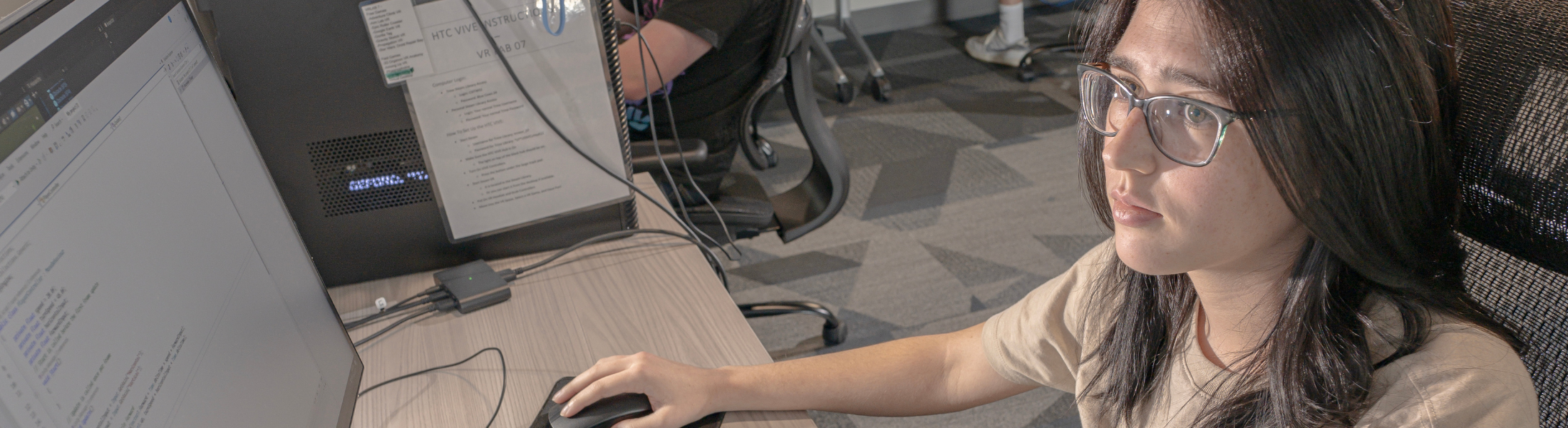
Top-of-the-line virtual reality and extended reality equipment
Seven computers featuring 4090 graphics cards and AMD Ryzen 9 7950X 4.5 GHz processors
with Corsair DDR5 DIMM RAM, used to develop artificial intelligence that can guide
naval vessels and predict flow patterns in large bodies of water
During your time as a computer science student at Trine, you willexperience:
An induction into the Order of the Computing Professional
A fully-paid trip GRR Con Hacking Convention in Grand Rapids, Michigan
Trine offers a variety of courses for the Bachelor of Science in computer science
to equip you with the skills for a broad range of professional fields.
Algorithm Design and Analysis: Analyze algorithms for asymptotic required memory and time. Implement stacks, queues,
dictionaries, priority queues using arrays and linked lists. Apply recursion, backtracking
and dynamic programming. Use classic strategies like greedy search and branch-and-bound.
Use trees and graphs to solve problems. Explain theory of computation and complexity
classes.
Software Patterns and Team Development: Learn the code development process using an object-oriented computer language in this
project-oriented course. Identify activities of software project engineering. Write
a formal requirements document. Perform object-oriented analysis of client requirements.
Use UML class and sequence diagrams to support object-oriented design. Apply some
software design patterns. Implement designed software in a team supported by a version-control
tool. Use a professional-caliber GUI library to advantage.
Artificial Intelligence and Information: Become introduced to the field of artificial intelligence: LISP language, search techniques,
games, vision, representation of knowledge, inference and process of proving theorems
and natural language understanding.
You will haveaccess to cutting-edge technologyas early asyour first yearin Trine's Bachelor of Science in computer science. Throughsmall class sizes, you will have the opportunity tocreate strong relationshipswith your expert faculty.
Trine's Bachelor of Science in computer science's curriculum allows for you todevelop your skills furtherby pursuing arelated minor: artificial intelligence, data science, robotics, game design, esports and cybersecurity.
At Trine, you will learn a variety of skills in the Bachelor of Science in computer
science that translate into professional roles, advanced study and research opportunities.
The curriculum balances theoretical knowledge and practical application, with an emphasis
on the ethical and social implications of computing. This foundation, in addition
to several firsthand experiences, will make you a multifaceted, necessary graduate
in the workforce.
Trine graduates will be prepared for the followingcareer possibilities:
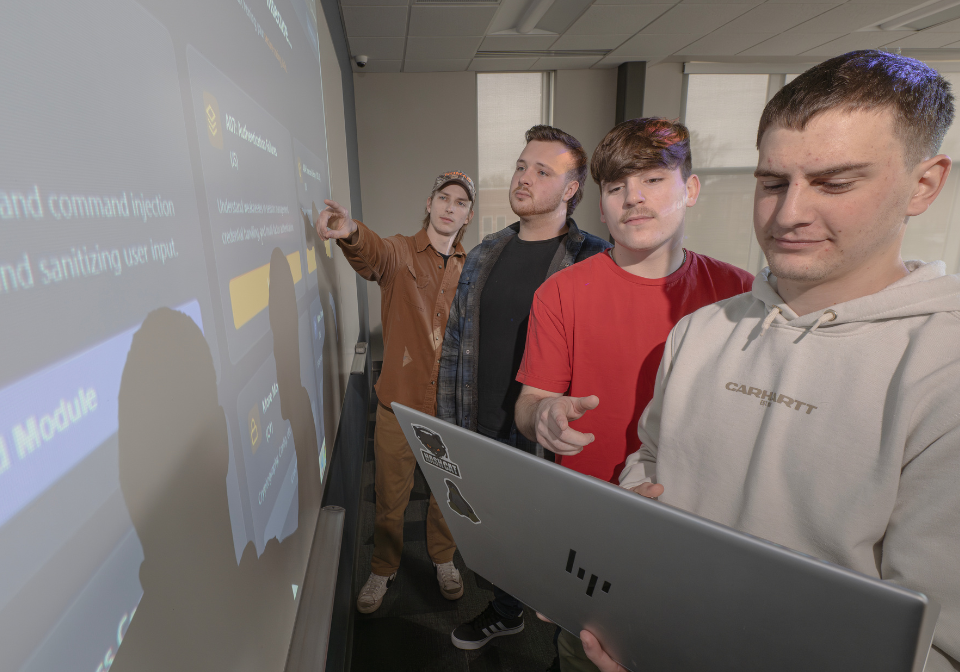
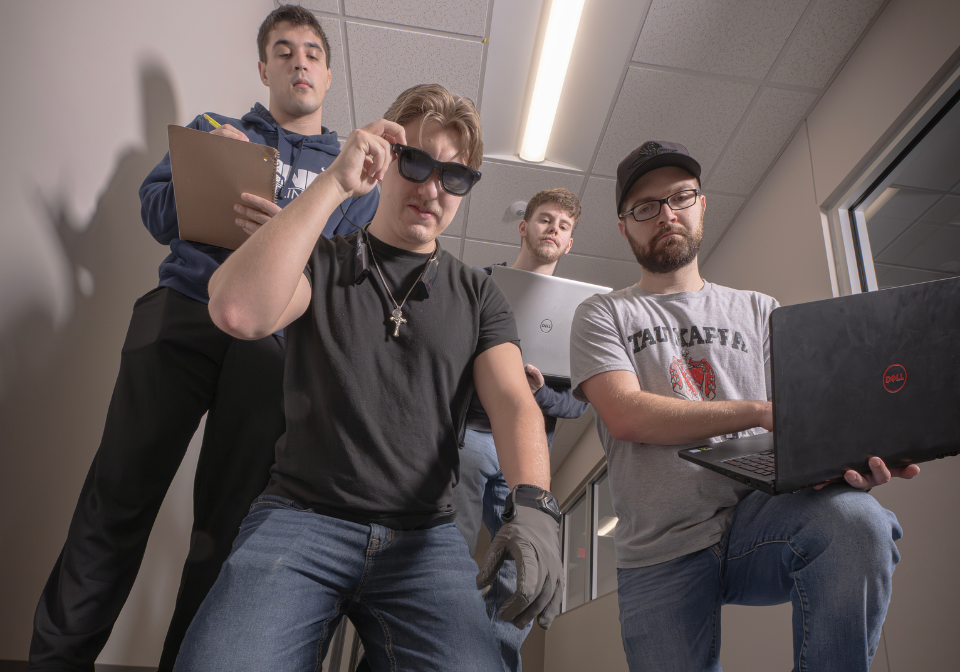
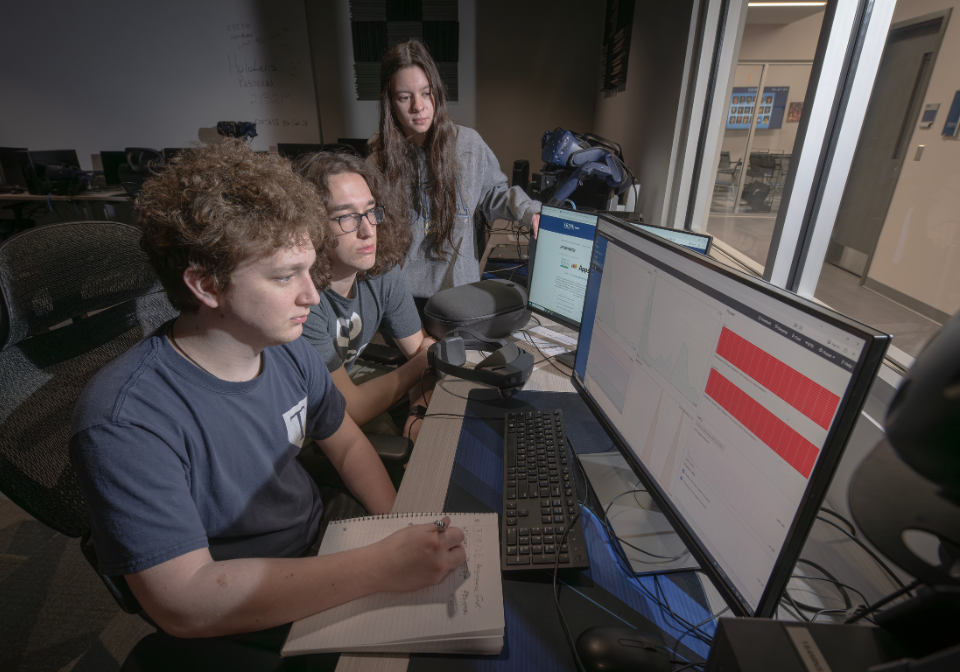
Leading technology, powerful equipment. Trine's senior computer science students showcase
a culmination of their experiences and knowledge with a year-long design project.
1/8
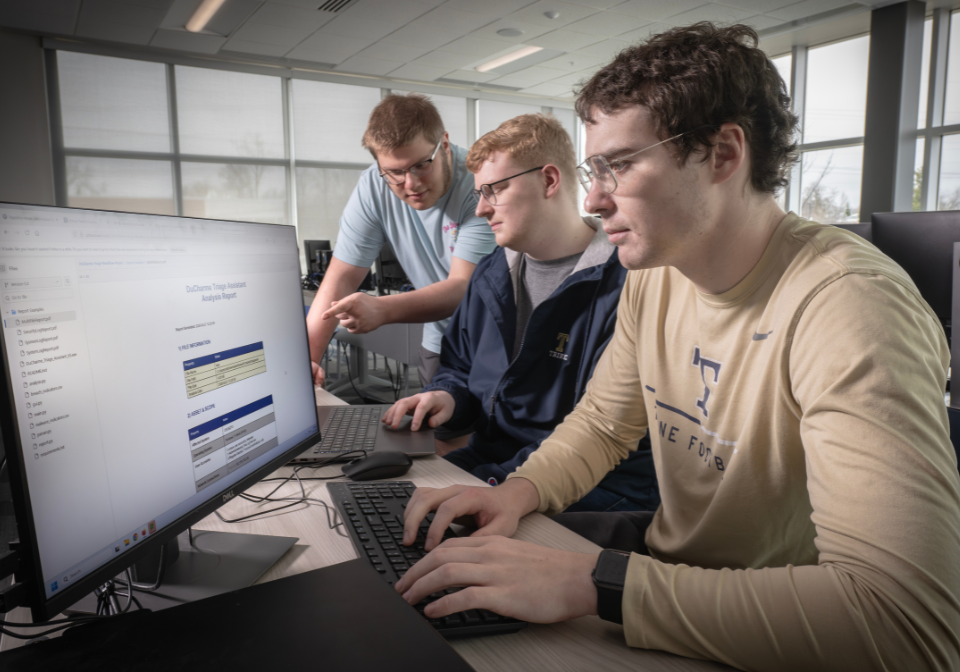
This group created a GUI-based triage log parser with threat analysis and summary
reports.
2/8
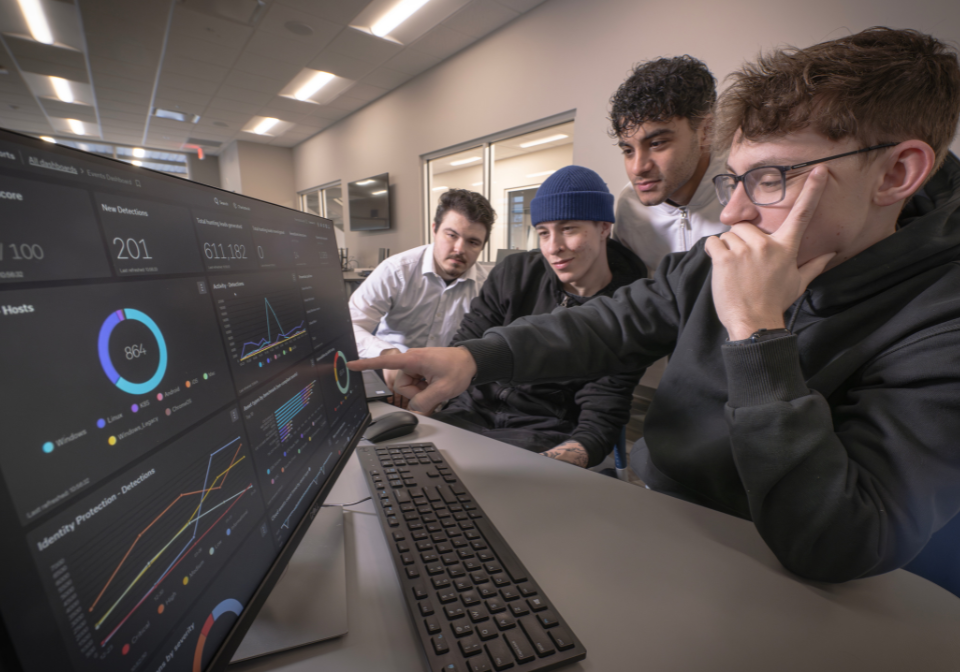
Sponsored by Franklin Electric, this cybersecurity initiative reduced vulnerability
dwell time and enhanced visibility into unmanaged assets. The project improved global
cyber hygiene and replaced manual tracking with automated workflows using the CrowdStrike
ecosystem, including Fusion SOAR and Foundry. The system automated patch validation,
enforced SLA compliance and integrated real-time "shadow IT" detection with ServiceNow
and email. It closed security gaps while providing executive dashboards and technical
playbooks for a proactive defense.
3/8
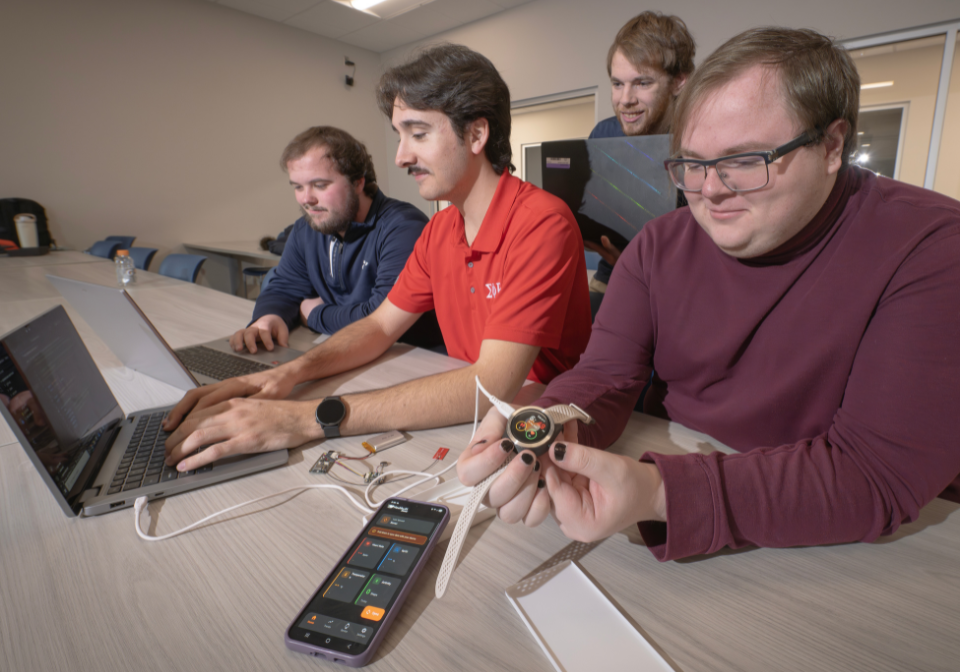
This group developed GuardianLink, a health-monitoring system that enhances service
dogs' life-saving capabilities for veterans with PTSD. The system links a wearable
smartwatch to a haptic device in a dog's vest. By monitoring physiological vitals
in real-time, it identifies biometric spikes indicative of an impending episode and
triggers a vibration on the dog's vest. This ensures intervention even if the dog
is asleep or at a distance. By providing a silent, immediate alert, GuardianLink allows
service animals to mitigate episode severity at the earliest possible moment.
4/8
Trine's InnovationOne is receiving more patent submissions than the current physical
display hall can accommodate for, and Trine alumni lack an efficient method to submit
their patents for inclusion. This group created a publicly accessible website utilizing
a digital content management system and a custom database hosted on Digital Ocean,
displayed through a touchscreen kiosk in the Hall of Innovation. This system enabled
staff to easily manage and categorize patents while providing visitors with an organized,
interactive and space-efficient means of exploring Trine's innovations.
5/8
The increase in AI-generated code has introduced system-wide security risks, as developers
are starting to bypass traditional code testing methods. This project proposed a web-based
platform to mitigate these vulnerabilities through a dual pronged approach: gamified
learning modules where users identify and refractor insecure to climb a leaderboard,
and an integrated SAST code scanning interface which allows for direct scanning of
code files for vulnerabilities in house.
6/8
This group partnered with BAE Systems and Adaptive Adventures to build an AR hiking
aid for visually impaired veterans. Using VITURE Luma Ultra XR glasses, the system
detected obstacles like rocks, roots and terrain changes in real time. Then, it alerted
the user through haptic gloves. The goal was to improve safety, confidence and independence
on the trail.
7/8
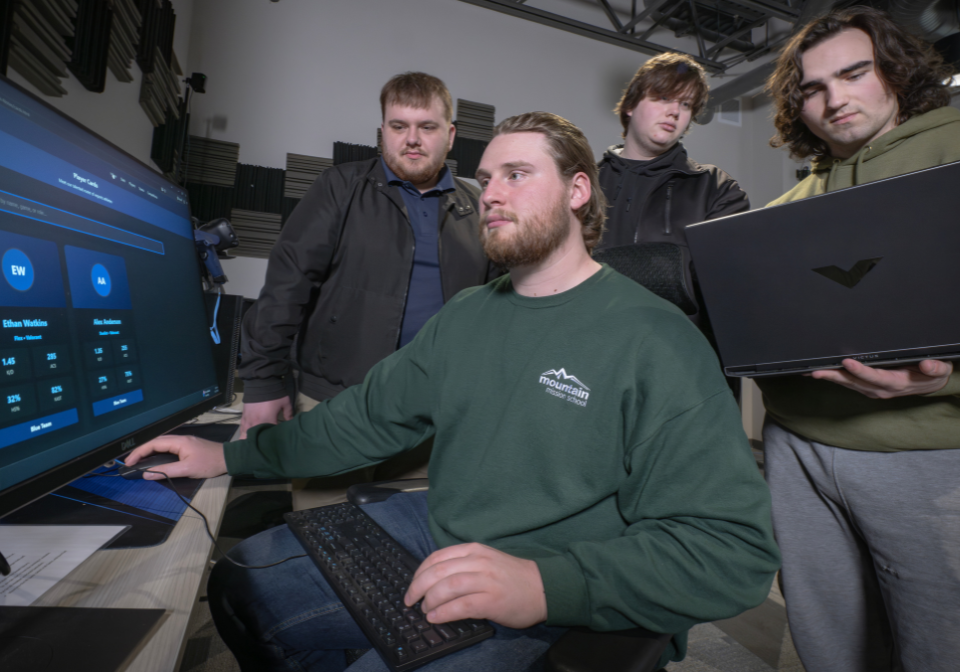
Developed for Trine, this platform provided a comprehensive hub for tracking esports
performance across 11 competitive titles, including Overwatch 2 and Rocket League.
The site featured real-time player metrics, interactive leaderboards, team rosters
and live tournament tracking via a responsive, card-based UI. Built with a mobile-first
approach using HTML5, CSS3 and JavaScript, it integrated live Twitch streams and performance
KPIs to showcase the program's achievements and facilitate team management.
8/8
The XR CVC Trainer project used mixed reality technology and the Microsoft HoloLens
2 to create a self-guided training system for a common hospital procedure called central
venous catheter placement. The system combined 3D models, hand tracking and physics-based
interactions to let medical staff practice safely without risk to patients. This engineering
solution provided flexible, on-demand training access, especially for night staff
and clinicians working on the hospital floor.
The Trine University music program will open its 2026-2027 concert season with the return of its annual “Halloween Haunt-cert” at 3 p.m. Saturday, Oct. 24.
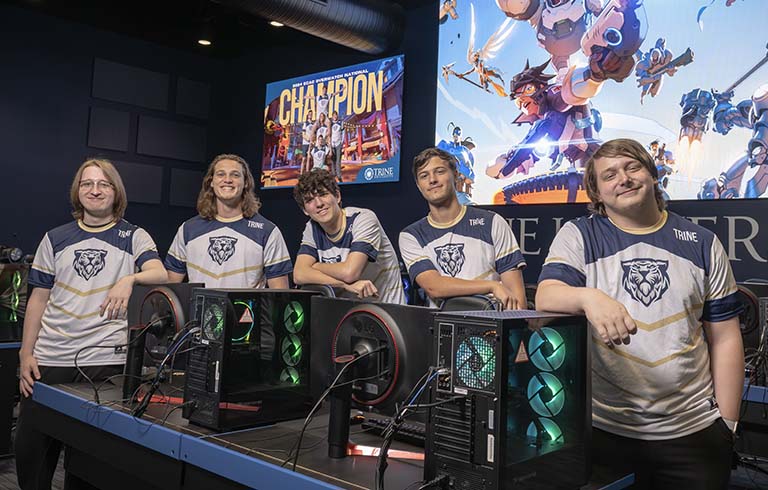
Trine University’s esports teams won the Block House Esports League MIAA competition Sunday, April 12, the first time Trine has secured the title in back-to-back semesters.