
Trine collecting food for annual Crush Hunger effort
October 26, 2026
Trine University is collecting food through Nov. 6 for Community Harvest Food Bank’s 12th annual “U Can Crush Hunger” campaign.
1/3
April 05, 2023
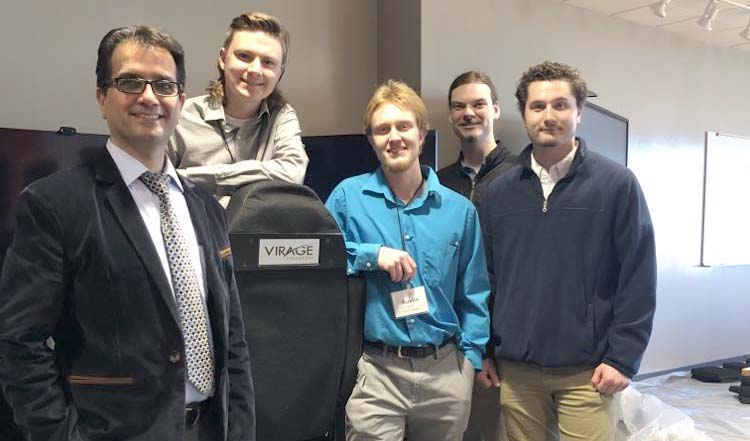
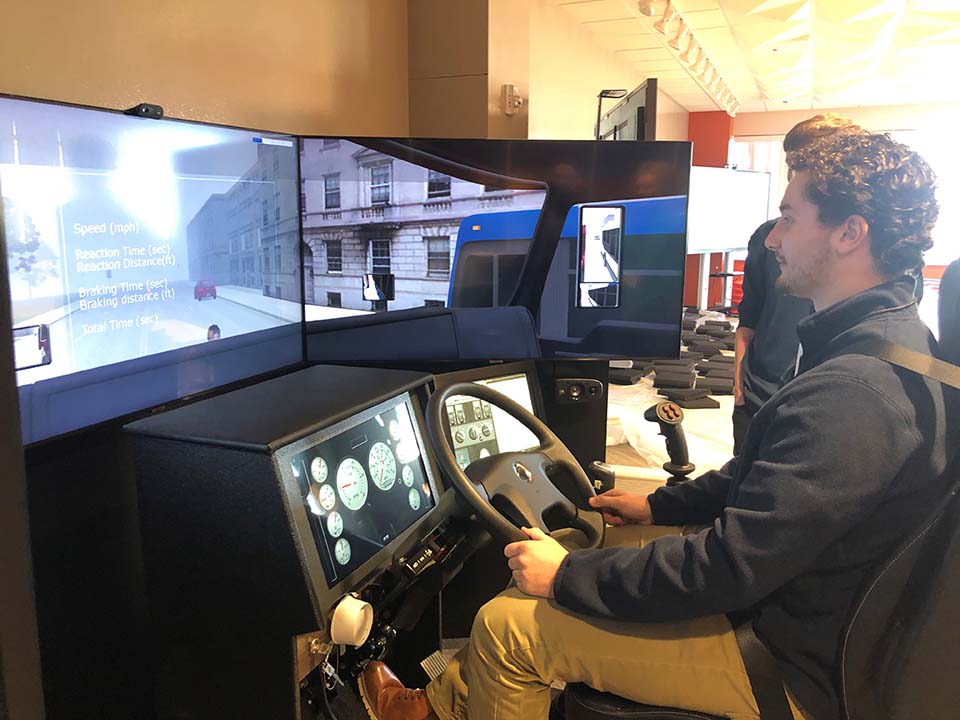
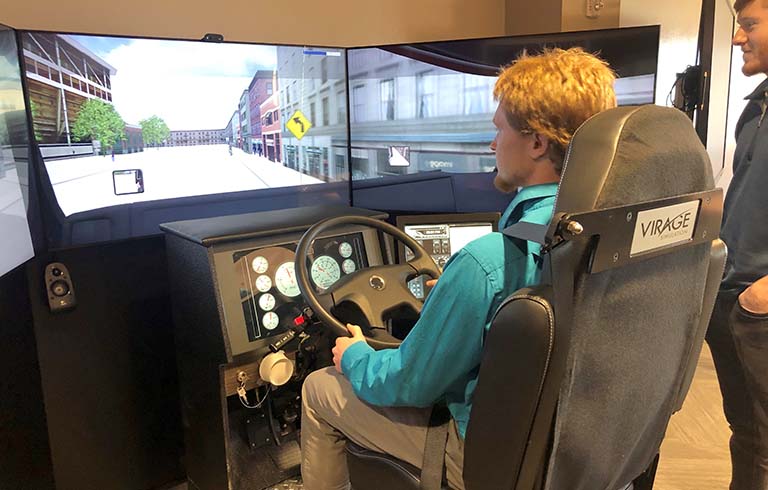
WEST LAFAYETTE, Ind. — Four Trine University civil engineering majors got hands-on experience with safe driving principles in the Indiana Local Technical Assistance Program (LTAP) driving simulator.
Students Aspen Fisher, Ryan Gienger, Austin Smith and Austin Zank all used the simulator while attending the Purdue Road School Transportation Conference & Expo on March 14-15.
The students attended the workshop as part of activities in the Transportation Engineering class at Trine. Hemin Mohammed, Ph.D., PE, who teaches the class, said the Road School’s safe driving training closely aligned with the course curriculum.
Jack Bell, a Purdue University civil engineering graduate student, designed a training programThe workshop was comprised of six sections: Time & Managing Risks/Hazards, Distracted Driving, Basic Maneuvers, Vulnerable Users, Drowsy Driving and Backing & Parking.
“The intended outcome for our students was to gain understanding and familiarity with driving different-size vehicles in various environments and to identify safe driving habits for all drivers regardless of experience,” Dr. Mohammed said.
The Virage simulator, located at the Indiana LTAP office in West Lafayette, exposes learners to dangerous situations that cannot be replicated in traditional behind-the-wheel training, Dr. Mohammed said.
Trine University is collecting food through Nov. 6 for Community Harvest Food Bank’s 12th annual “U Can Crush Hunger” campaign.
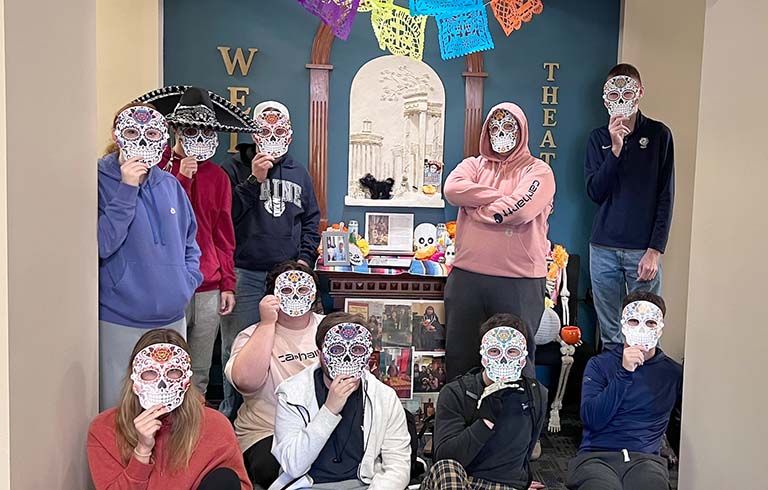
Isabel Soto, instructor, and her Spanish students have created an ofrenda (decorated altar) honoring Ana Boman, who taught Spanish in Trine University’s Department of Humanities and Communication for 16 years before she passed away last year.
Trine University has launched Dual Advantage, a new program that gives undergraduate students multiple pathways to earn both a bachelor’s degree and an advanced degree in less time than completing both degrees separately.