Matchbook Learning, Ameresco host groundbreaking ceremony for The Match
March 25, 2024
Share
Education One and Matchbook Learning officials participated in the groundbreaking
for The Match High School on March 20. From left, Caitlin Hicks, assistant director
of graduation pathways and compliance, Education One; Lindsay Omlor, executive director
of charter schools, Education One; James Hill, founding principal, The Match High
School; Amy Swann, Ph.D., CEO, Matchbook Learning; Emily Gaskill, assistant director
of accountability, Education One; and Sheila Corbin, director of academics, Matchbook
Learning.
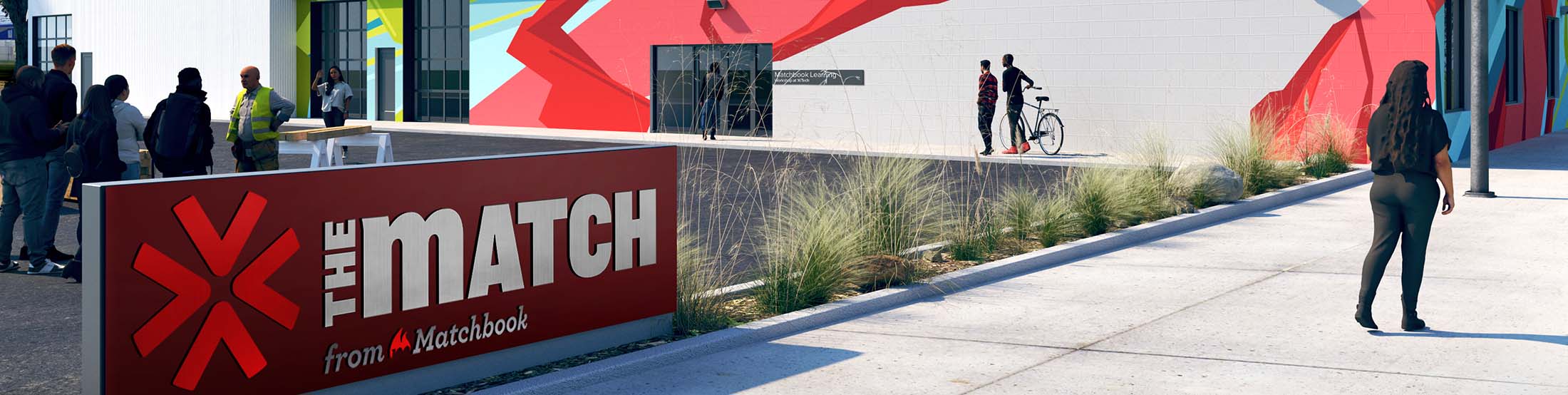
INDIANAPOLIS — Officials broke ground March 20 on The Match High School in Indianapolis.
The Match, authorized by Education One at Trine University, will serve grades 9-12 and will feature a state-of-the-art facility
for vocational learning and early career exploration. The Match High School and Career
Center will support an inclusive, technologically enhanced curriculum aligned with
the goal of providing all students with a clear pathway to success.
Matchbook Learning and Ameresco, a clean technology integrator specializing in energy
efficiency and renewable energy, will start renovating the buildings for the upcoming
school year.
In 2023, Matchbook Learning was selected, alongside 23 other organizations, for the
U.S. Department of Energy’s Renew Americas Schools Grant for critical facility and
energy improvement funding. The grant, available to more than 1,000 applicants, totals
over $5.3M, and will be used to partially fund the development of The Match High School
and Career Center.
“Matchbook Learning was founded to revitalize the nation’s underperforming schools
and inspire every student to reach their full potential,” said Sajan George, Founder,
Matchbook Learning Schools of Indiana, Inc. “Key to this undertaking is ensuring that
students are served in sustainable facilities that provide students with a safe and
inspiring environment for learning and collaboration.”
Matchbook Learning selected Ameresco to oversee all aspects of design, engineering
and construction for The Match High School and Career Center. The $5.3 million grant
will fund many energy improvements to The Match High School and Career Center buildings,
including a new 165-KW solar PV and energy storage system (BESS), which will provide
clean, renewable backup energy to power the school’s operations.
Additionally, both buildings will include new insulated TPO roofs, interior and exterior
LED lighting and heat pump domestic hot water heaters.
“We are excited about the development of The Match High School and Career Center as
we look ahead to welcoming our first cohort of students in the summer,” said Dr. Amy
Swann, CEO, Matchbook Learning. “Providing students with a modern educational environment
is a challenge top-of-mind for school leaders across the country, and we are invigorated
by the U.S. Department of Energy’s Renew America’s Schools Grant to embark on this
comprehensive school infrastructure development project support energy efficiency
and sustainability.”
The Match High School and Career Center campus will comprise two buildings, with the
main school located at 1401 Indiana Ave. and the career center stationed at 1141 W
16th Street. The 16th Street building is expected to open its doors to students starting
Aug. 1, 2024, for the 2024-25 school year.
The Indiana Avenue location is targeted to open for the second semester in January
2025. The Match Career Center will feature an in-depth vocational curriculum offering
education in construction trades, welding, engineering and entrepreneurship.
Trine University has launched Dual Advantage, a new program that gives undergraduate students multiple pathways to earn both a bachelor’s degree and an advanced degree in less time than completing both degrees separately.
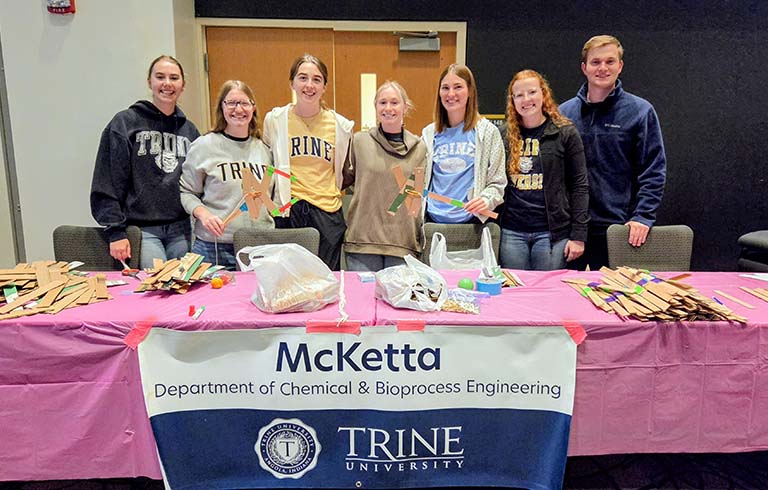
Trine University student organizations and the McKetta Department of Chemical and Bioprocess Engineering recently offered activities for girls interested in science and engineering at the 2026 STEM Expo hosted by the Girl Scouts of Northern Indiana-Michiana (GSNI-M).