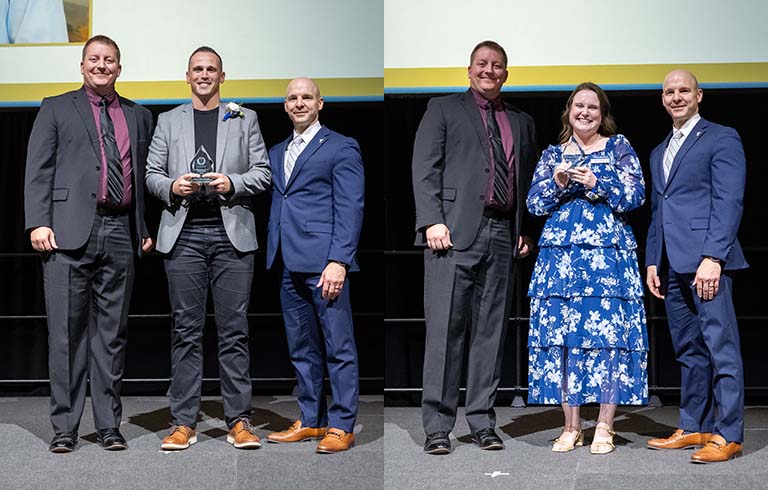
Trine honors alumni at Touchstone
October 6, 2026
Trine University honored two distinguished graduates with alumni awards during its annual Touchstone and Homecoming Celebration Dinner on Friday, Oct. 2.
1/3
January 13, 2026
Juveniles who have been part of Steuben County’s Juvenile Detention Alternatives Initiative (JDAI) program as opposed to being incarcerated are less likely to re-offend as adults, according to research by two Trine University faculty members.
They also found those on whom JDAI used a structured assessment tool were even less likely to re-offend.

Trinity Wright, JDAI coordinator for Steuben County, said the project started with her predecessor, Kathy Armstrong, in 2024.
“The Trine staff have been supportive and collaborative with JDAI since its introduction to Steuben County in 2016, which made them a natural partner for this research,” she said.
Alternatives to incarceration
JDAI seeks community-based alternatives to youth incarceration. The program is available in more than 300 jurisdictions in 40 states and the District of Columbia.
“Since its inception in 1992, the JDAI has sought to reduce the over-reliance of the juvenile justice system on secure detention,” the research report says. “Their mission has been to do this while improving public safety, enhancing equity, and even saving taxpayer money. According to their data, they have done just that nationally and specifically within Steuben County.”
The Trine faculty discovered there was no readily available national data on the recidivism rate for juvenile offenders as adults. The 39 states that collect such data use different standards, and most research focuses on incarcerated juveniles as opposed to those who take part in programs such as JDAI.
Positive results
The researchers averaged the data available and discovered that the observed rates of recidivism for juveniles who went through JDAI were significantly less, even more so for those who were evaluated using an assessment tool.
They felt one of the most important findings from the project was the demonstrated effectiveness of using the assessment tool.
“We would recommend that Steuben County JDAI increase the use of such tools as much as possible and in so doing, we believe they will continue to see reduced juvenile-to-adult recidivism,” they said.
Wright said JDAI and its steering committee were pleased with the findings, which she has shared with local stakeholders. She hopes the results will help support further juvenile system reforms.
She said JDAI plans to collaborate with the university on future research projects.
“I would like to extend my deepest gratitude to Darrin Wilcox, Michael Smith, Melissa Higbee (Fremont Youth and Community Outreach Executive Director) and Kim Hutchins (Steuben County Juvenile Probation Officer) for their time and dedication in seeing this research project to its conclusion,” she said. “This would not have been possible without their knowledge and skill. I would also like to thank all our stakeholders here at the county for their work in juvenile justice reform.”
Trine University honored two distinguished graduates with alumni awards during its annual Touchstone and Homecoming Celebration Dinner on Friday, Oct. 2.
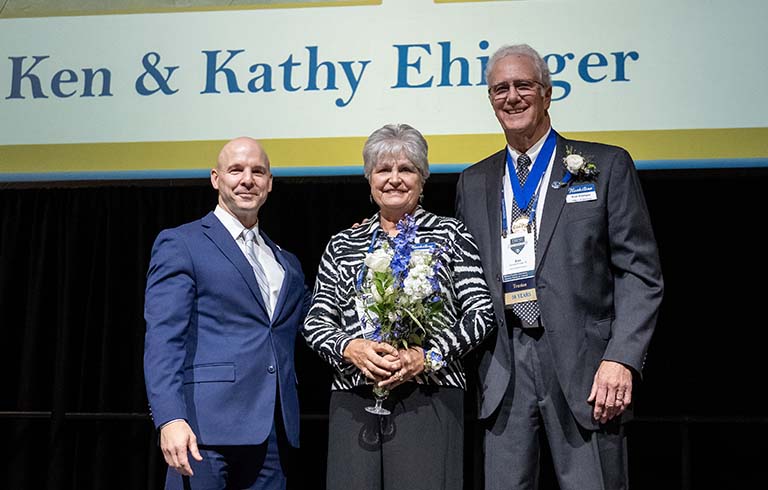
Trine University honored Board of Trustees member and alumnus Ken Ehinger and his wife Kathy, who support the university’s Ehinger Fellows along with many other programs, with its Pillar of Success during the university’s Touchstone and Homecoming Celebration Dinner on Oct. 2.
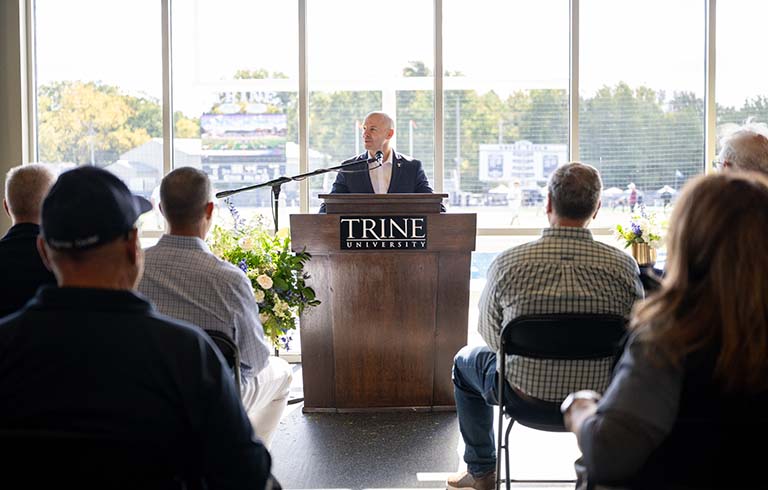
Continuing its support for a premier student experience, Trine University dedicated its new Trine Family Training Center on Saturday, Oct. 3.