Dealing with Sports Injuries, Avoiding Injuries and Overuse
This post was authored by several Trine University students as part of a classroom group research project for SM-393 Sport Psychology. The Trine University Center for Sports Studies Blog features these student contributions to showcase their academic work, encourage thought-provoking discussion, and highlight new perspectives within the study of sports.
Dealing with Sports Injuries, Avoiding Injuries and Overuse
by Jonathan Fiwek, Lucas Lundin, Sal Orlandi, Brittany Stadelmayer and Kiley Williams
The perfor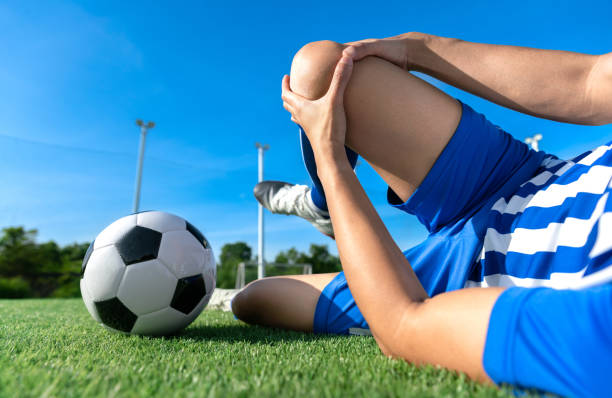 mance and general health of an athlete can be greatly impacted by sports injuries.
For athletes of all levels, it is important to understand how to treat these injuries,
as well as ways to prevent them. Injuries play an integral role in how athletes interact
with a sport. An injury could derail an athlete's career or inspire them to reach
greater heights. The detrimental psychological and physiological effects are something
that every good coach will strive to avoid. Injury reduction is as much of an art
as the sport itself. While the physical effects of injury in sports can spell the
end of an athlete's career, the mental effects can be equally destructive. While athletes
have been shown to persist against the physical results of an injury, without proper
recovery, it can pose a severe threat to the athlete's health. Athletes can improve
their mentality and save time by putting efficient coping mechanisms and recovery
techniques into practice.
mance and general health of an athlete can be greatly impacted by sports injuries.
For athletes of all levels, it is important to understand how to treat these injuries,
as well as ways to prevent them. Injuries play an integral role in how athletes interact
with a sport. An injury could derail an athlete's career or inspire them to reach
greater heights. The detrimental psychological and physiological effects are something
that every good coach will strive to avoid. Injury reduction is as much of an art
as the sport itself. While the physical effects of injury in sports can spell the
end of an athlete's career, the mental effects can be equally destructive. While athletes
have been shown to persist against the physical results of an injury, without proper
recovery, it can pose a severe threat to the athlete's health. Athletes can improve
their mentality and save time by putting efficient coping mechanisms and recovery
techniques into practice.
Review of Literature
In a study investigating the correlation between injury and mood, Haugen found that “The time immediately post injury is associated with the poorest mood states and heightened anxiety, although anxiety may decrease over time regardless of injury type” (Athlete Mental Health & Psychological Impact of Sports Injury). There are many reasons that the time immediately following injury provides the poorest mood state. Some of these factors may, depending on the athlete, include injury severity, when surgery will happen, rehab plans and schedules, and the process of getting back to the sport. Returning from a serious injury can be very challenging for athletes and can lead to mental health challenges such as depression, lowered self-esteem, and fear of re-injury. According to an article in the International Journal of Environmental Research and Public Health (IJERPH), post-injury athletes are at a greater risk of depression and anxiety than their peers. The journal states that "Sport-related injuries, especially those that result in a significant time loss, can have a profound negative effect on one’s mental health" (Sullivan et al., 2022). Athletes who were injured tested higher for both depression and anxiety. The presence, quality, and timing of social support were instrumental in reducing symptoms of depression and anxiety and improving overall mental health. This has strong implications for mental and physical health care experts.
Many athletes dealing with prolonged injuries may experience a loss of identity, anxiety, feelings of ostracism, and hormonal-induced stress. Lindsey Wilson, a former elite basketball player at Iowa State University, further researched the implications of an injury on an athlete’s psyche. According to Wilson (2012), athletes may experience a loss of identity after an injury due to integrating a sport with their personality for most of their lives. Alienation from one’s identity potentially stems from an athlete’s devotion to a particular sport. An athlete’s sport is a hobby that takes up the individual’s time and money. Removing a hobby instantly could damage an athlete’s mentality by creating a “void” in their life. As a result, “...trauma-like symptoms may occur after injury for 23% to 45% of athletes” (Aron et al., 2019). It may be difficult to detect the onset of trauma-like symptoms, but there are different ways to prevent or prolong this trauma response in athletes. During the beginning phases of injury, athletes should be informed of any information regarding their injury. Additionally, they should obtain help sorting through their psychological responses. Lastly, they need social support from family, friends, teammates, coaches, athletic trainers, etc.
Implications for the Practitioner
Practitioners need to practice extreme care when dealing with post-injury athletes, especially those with a significant time loss in their sport. Since these athletes are at a greater risk for depression, they should be under greater scrutiny for the duration of and after their injury. Practitioners also must monitor social support and encourage injured athletes to seek it. These psychological problems can affect athletes at every level, so they need different coping mechanisms and ways to stay motivated and optimistic, which can be achieved in several ways.
A commonly used coping mechanism for injured athletes is imagery. Charles (2017) provides insight into how mental imagery can enhance injury rehabilitation and help athletes handle the psychological challenges they face when injured. He describes three types of imagery: visual, expressive, and healing. Visual imagery involves athletes imagining themselves performing sports movements to retain skills and rehearse emotions, aiding motor skill retention, and bringing them closer to returning to play. Emotive imagery is the process of recalling achievements or performances from the past to replicate the mental state that leads to success. Healing imagery involves the athlete visualizing their body healing, reducing pain, and potentially reducing recovery time.
These different methods of imagery can help alleviate mental health challenges and
retain physical skills during injury recovery. In the qualitative study “Exploring
Attributional and Coping Strategies in Competitive Injured Athletes: A Qualitative
Approach” (2022), researchers found that goal setting, positive self-talk, and positive
mental imagery are excellent coping mechanisms for injured athletes. Goal setting
involves focusing on clear and concise goals and working toward them consistently.
Positive self-talk is the practice of improving how athletes communicate with themselves.
Lastly, positive mental imagery is when athletes visualize their success and build
strong self-belief. Coping mechanisms are an effective way for athletes to work through
their injuries.
Conclusion
Overall, a comprehensive strategy that focuses on prevention, education, and appropriate recovery is necessary to effectively manage sports injuries. To reduce the risk of overuse injuries, athletes should prioritize proper training methods, mental health care during and after injury, and proper recovery. Both amateur and professional athletes can increase their proficiency in sports by building a culture of awareness about the value of paying attention to one's body and identifying signs of injury. Working with medical specialists also provides quick treatment and rehabilitation, allowing athletes to safely resume their sport. In the end, a proactive approach to injury management and recovery can result in greater health and performance.
References
Aron, C. M., Harvey, S., Hainline, B., Hitchcock, M. E., & Reardon, C. L. (2019). Post-traumatic stress disorder (PTSD) and other trauma-related mental disorders in elite athletes: a narrative review. British Journal of Sports Medicine, 53(12), 779–784. https://doi.org/10.1136/bjsports-2019-100695
Charles, T., & Sundgot-Borgen, J. (2017). Utilizing imagery to enhance injury rehabilitation. The Sport Journal. https://thesportjournal.org/article/utilizing-imagery-to-enhance-injury-rehabilitation/
Haugen, E. (2022). Athlete mental health & psychological impact of sports injury. Operative Techniques in Sports Medicine, 30(1). https://doi.org/10.1016/j.otsm.2022.150898
López, D., Feu, S., & Motta, C. (2023). Exploring attributional and coping strategies in competitive injured athletes: A qualitative approach. Frontiers in Psychology. https://doi.org/10.3389/fpsyg.2023.1287951
Sullivan, L., Ding, K., Tattersall, H., Brown, S., & Yang, J. (2022). Social support and post-injury depressive and anxiety symptoms among college-student athletes. International Journal of Environmental Research and Public Health, 19(11), 6458. https://doi.org/10.3390/ijerph19116458
Wilson, L. (2012). Injury - The mental side. Positive Performance Training, Inc. https://www.positiveperformancetraining.com/blog/injury-the-mental-side