
Family Nurse Practitioner
Designed for working nurses, this is a fully online, flexible track. You can complete
this program is as few as six semesters.
Learn moreMaster’s

Nurses with a Master of Science in nursing (MSN) are in demand! The American Association of Colleges of Nursing (AACN) has identified a national need to fill established and emerging nursing roles with those who are prepared at the master's level. There is also an urgent need for advanced nursing education and leadership skills across the United States. While 17.4% of the nation's registered nurses held a master's degree in 2022, more recent estimates indicate that approximately 20% of nurses now hold a master's degree or higher, reflecting a gradual increase in education attainment across the workforce. Despite this progress, the demand for master's-prepared nurses in advanced practice, clinical specialties, education and research roles continues to far outpace the national supply. To apply for this program, you must be a registered nurse with an unrestricted license in the United States.
As a student in a fully online MSN program at Trine University, you'll receive a quality, innovative educational experience to prepare you for leadership and educator roles in a variety of environments. You will learn to positively impact individuals, groups and communities through scholarship, leadership and service.
With an online format through TrineOnline, the MSN program offers convenience and accessibility. Courses are taught asynchronously and start every eight weeks, meaning you can study anytime from anywhere. The program's curriculum also provides a blend of digital coursework with firsthand practicum experience.
Expert faculty at Trine will provide guidance and support as you navigate your practicum placement. This unique combination of online and in-person learning will equip you with the confidence to make informed decisions and provide improved, patient-centered care.
The MSN program consists of eight core nursing courses, including a capstone portfolio that demonstrates your mastery of synthesis of the learning outcomes. Each of Trine's courses provide exceptional application-based knowledge that incorporate professional nursing standards and competencies relevant to contemporary nursing practice.
Trine University accepts an online application only. It can be accessed by clicking on the apply button on this webpage. The MSN program follows the university’s graduate admission policy outlined in the Trine University Student Handbook as well as the following criteria:
*The Accelerated Dual Degree undergraduate/graduate enrollment status is granted to those who concurrently seek a bachelor’s and master’s degree in nursing. These students, pending acceptance, will be changed to graduate status after earning their required undergrad credit hours, at which time they must have a cumulative grade point average of at least 3.0. Students who do not meet this standard will not be given graduate status and will be awarded the bachelor’s degree when the bachelor’s degree requirements are met.
Registered nurses who earn an MSN from Trine benefit through career advancement as leaders and educators with higher wages. As a graduate of Trine's program, you will be prepared to broaden your scope of influence in a variety of healthcare fields.
Those holding a Master of Science in nursing degree from Trine will be prepared for the following career possibilities:
Trine University MSN program aspires to meet the following outcomes:
*Data indicating how the program outcomes were met is not available at this time and will be posted at a later date.
The Trine University Master's Degree in Nursing Program holds initial accreditation from the National League for Nursing Commission for Nursing Education
Accreditation (NLN CNEA), located at 2600 Virginia Avenue, NW, Washington, DC 20037.
202-909-2487.
accreditation from the National League for Nursing Commission for Nursing Education
Accreditation (NLN CNEA), located at 2600 Virginia Avenue, NW, Washington, DC 20037.
202-909-2487.
Trine University is seeking pre-accreditation for the MSN Family Nurse Practitioner track. The Master's Degree in Nursing Program, Nurse Educator track holds initial accreditation from the National League for Nursing Commission for Nursing Education Accreditation (NLN CNEA) through October 31, 2031.
Information about tuition and fees can be found at Cost and Investment.
In support of the university’s mission and vision and the College of Health Profession’s mission and vision, the nursing program further defines the commitment to excellence:
| Mission | Vision | |
|---|---|---|
| University | Trine University promotes intellectual and personal development through professionally focused and formative learning opportunities, preparing students to succeed, lead and serve. | Trine University will be recognized as a premier private university, characterized as engaged, dynamic, growing and adding value. |
| Brooks College of Health Professions | The College of Health Professions at Trine University, by providing high quality, professionally focused and formative undergraduate and graduate science learning opportunities, enables its students, graduates and faculty to make a positive impact on the community through service, leadership and scholarship. | The College of Health Professions at Trine University will be recognized as a premier provider of undergraduate and graduate science education, adding value to the lives of its graduates and community. |
| MSN Program | The MSN Program at Trine University will provide a quality, innovative educational experience that produces graduate nurses capable of delivering safe, culturally and contextually relevant, evidence-based care in a variety of environments, while also preparing them to positively impact individuals, groups and communities through teaching, scholarship, leadership and service. | The MSN Program at Trine University will be recognized as a premier provider of graduate nursing education characterized by dynamic and engaging learning experiences, improving the lives of its graduates and community. |
Trine University Nursing faculty aspire to meet the following goals:
Teaching
Scholarship
Service
All MSN graduates share advanced core outcomes, followed by track-specific outcomes. Upon completion of the MSN program, graduates will:
Master of Science in Nursing
35-44 credit hours
Graduate
Online
Angie Logan, president and CEO of Cameron Health, was honored with Trine University’s annual Woman of Distinction award during the annual Touchstone and Homecoming Celebration Dinner on Oct. 2. Trine University continues to see strong enrollment growth in strategic areas, with a record incoming class expected at its Angola campus and more students than ever at the Brooks College of Health Professions (BCHP) in Fort Wayne. Trine University is offering select prerequisite coursework at a reduced tuition rate of $150 per credit hour for students planning to apply to the Associate of Science in Nursing (ASN) program beginning January 2027.
Latest Nursing News
All Nursing Articles
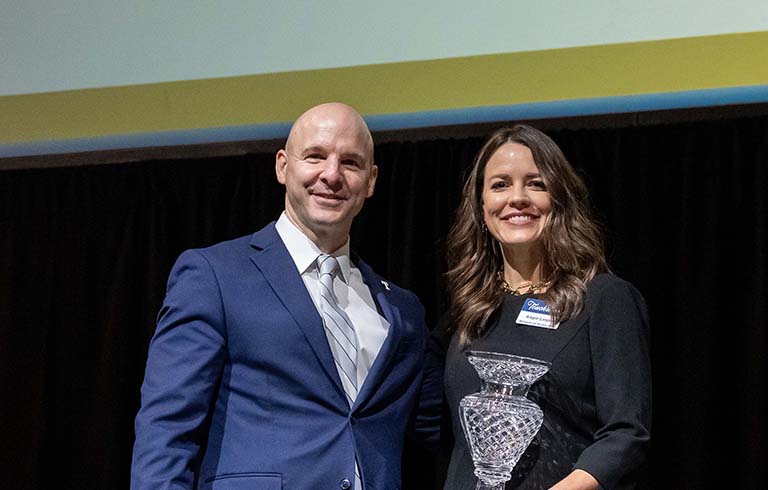
Cameron president, CEO honored as Woman of Distinction
October 6, 2026 1/3 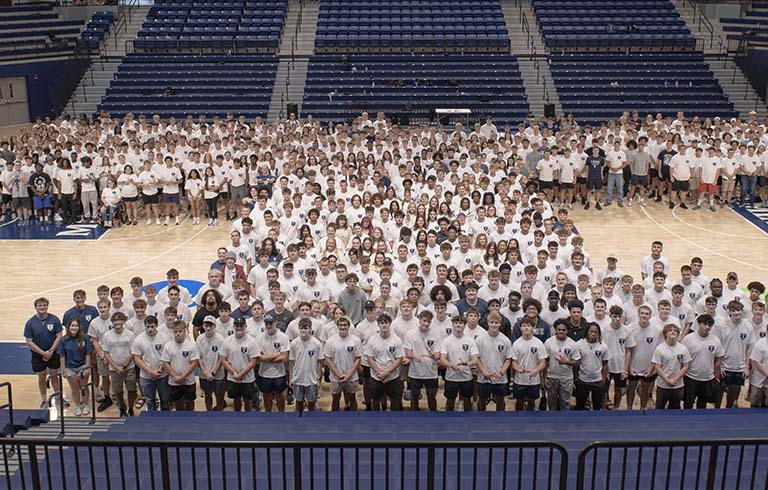
Trine sees record incoming class in Angola, more students at BCHP
August 31, 2026 2/3 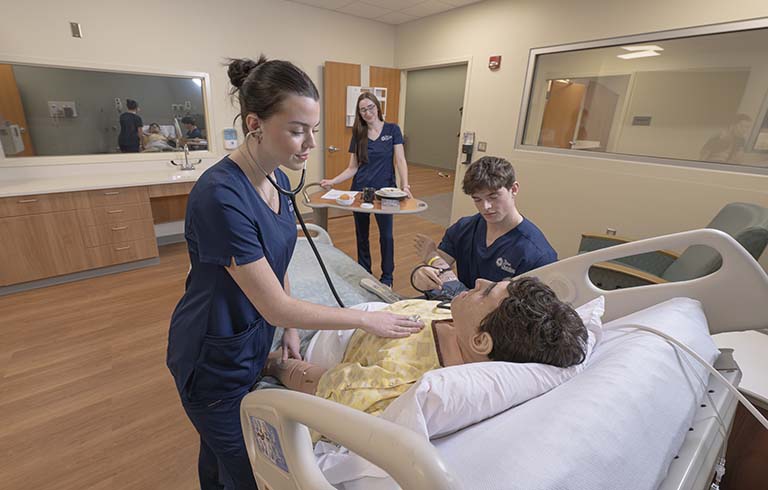
Trine offering reduced tuition for ASN prerequisites; application open
June 18, 2026 3/3