2025 Engineering Design Expo

Design, build, impact
The 2025 Engineering Design Expo showcased the achievements and innovation of students across the Allen School of Engineering and Computing's seven academic departments and 12 degree programs. We are grateful for the support of our industry sponsors that account for the majority of our total projects. Take a look at how Trine students are engineering the future.
Jim and Joan Bock Department of Biomedical Engineering
The Jim and Joan Bock Department of Biomedical Engineering integrates the design and problem-solving skills of engineering with medical and biological sciences to advance healthcare. The program offers students a broad background that includes the engineering school's proven hands-on approach while more fully integrating basic and healthcare sciences. Due to this interdisciplinary nature and rapidly advancing knowledge in the field of medicine, the biomedical engineering curriculum offers advanced and specialized course to keep up with current advancements.
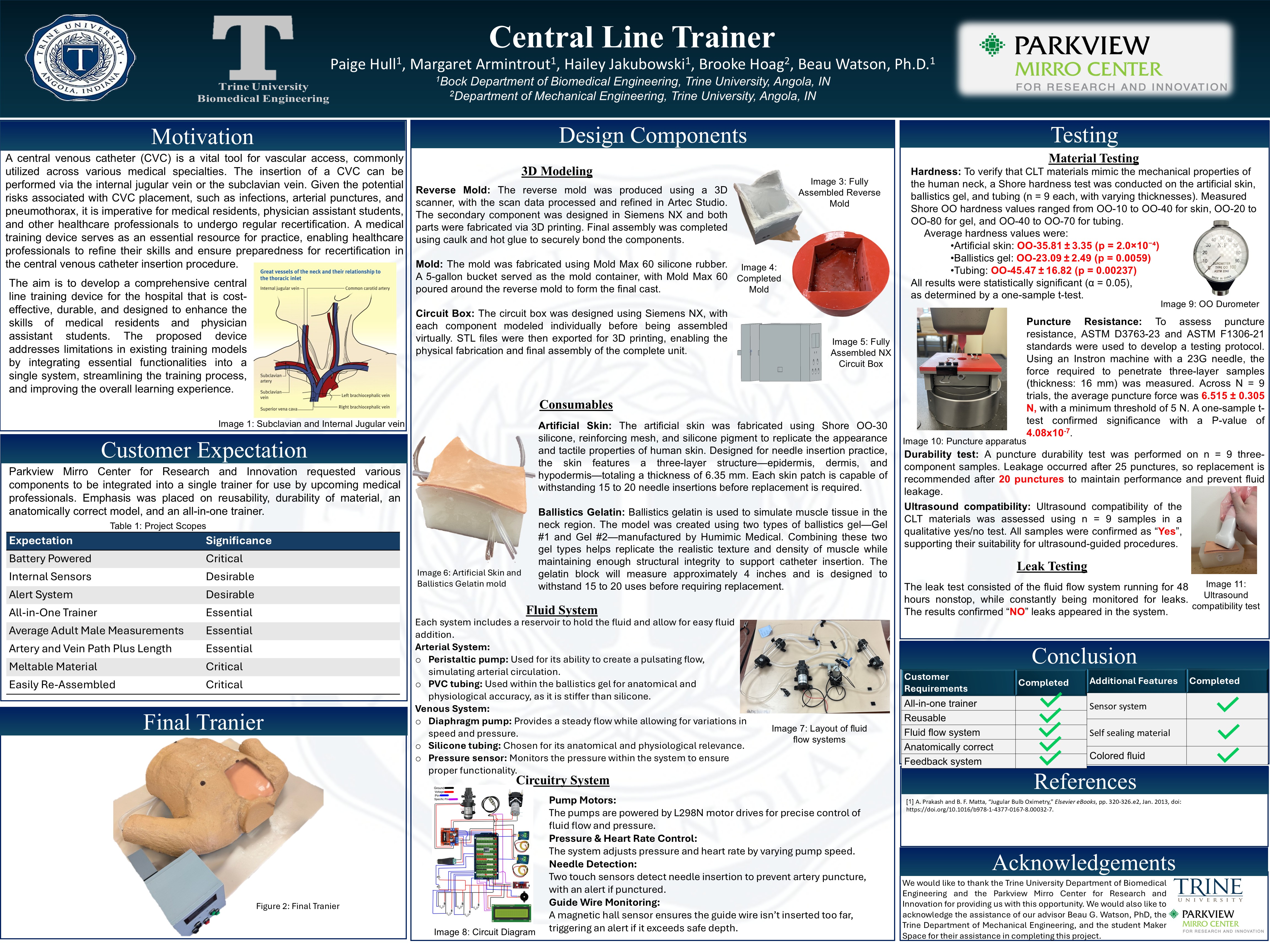
The Central Line Trainer is an advanced simulation device designed to assist healthcare professionals and students in mastering central line insertion. Equipped with integrated sensors, it provides real-time feedback by detecting errors, such as improper needle placement or excessive depth. This trainer enhances skill development, improves procedural accuracy and ensures a safer learning experience in clinical settings.
Members: Margaret Armintrout, Brooke Hoag, Paige Hull and Hailey Jakubowski
Advisor: Beau Watson, Ph.D.
Sponsor: Parkview Health
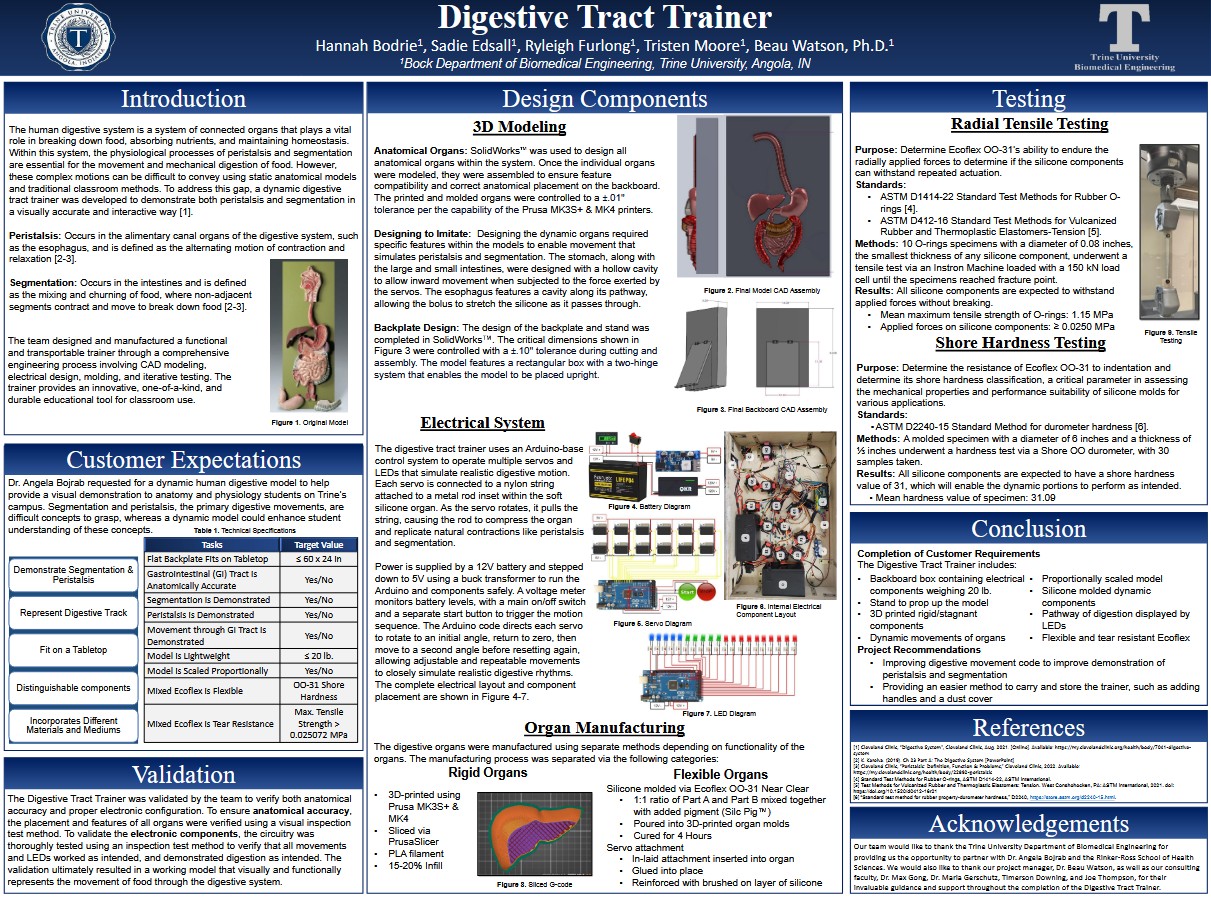
The Digestive Tract Trainer is an interactive anatomical model designed to visually demonstrate peristalsis and segmentation for enhanced student learning. Utilizing servo motors, 3D-printed components and silicone molds, the trainer simulates the dynamic movement of food through the digestive system. This project focuses on functionality, durability and anatomical accuracy to create an engaging and innovative educational tool for Trine University's Rinker-Ross School of Health Sciences anatomy and physiology courses.
Members: Hannah Bodrie, Sadie Edsall, Ryleigh Furlong and Tristen Moore
Advisor: Beau Watson, Ph.D.
Sponsor: Trine University's Jim and Joan Bock Department of Biomedical Engineering
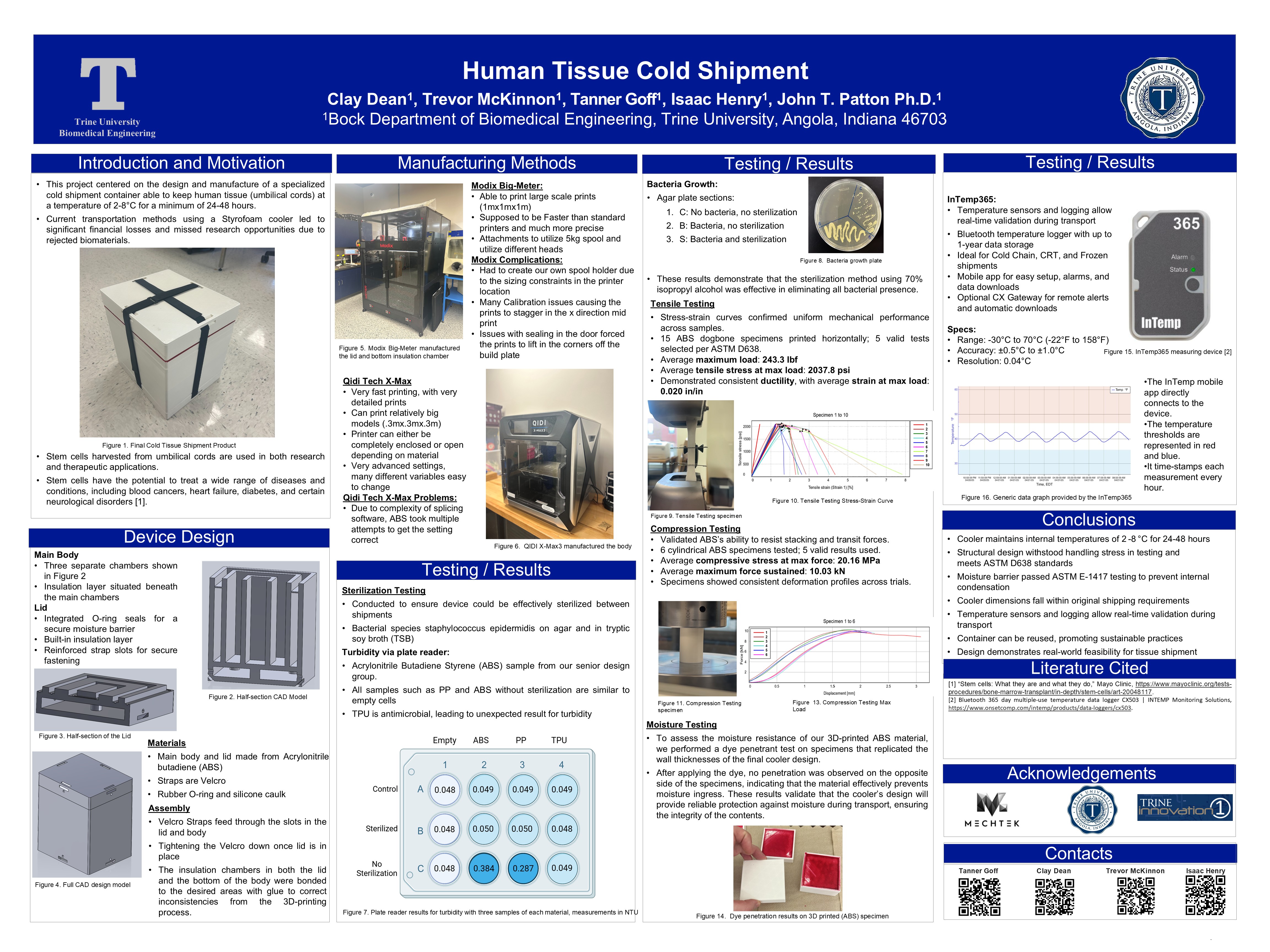
Our team developed a high-performance cooler designed for umbilical cord transport, capable of maintaining human tissues at a stable temperature of 2-8°C for at least 48 hours. This ensures optimal preservation of umbilical cords, which are crucial for harvesting valuable stem cells.
Members: Clay Dean, Tanner Goff, Isaac Henry and Trevor McKinnon
Advisor: John Patton, Ph.D.
Sponsor: Mechtek
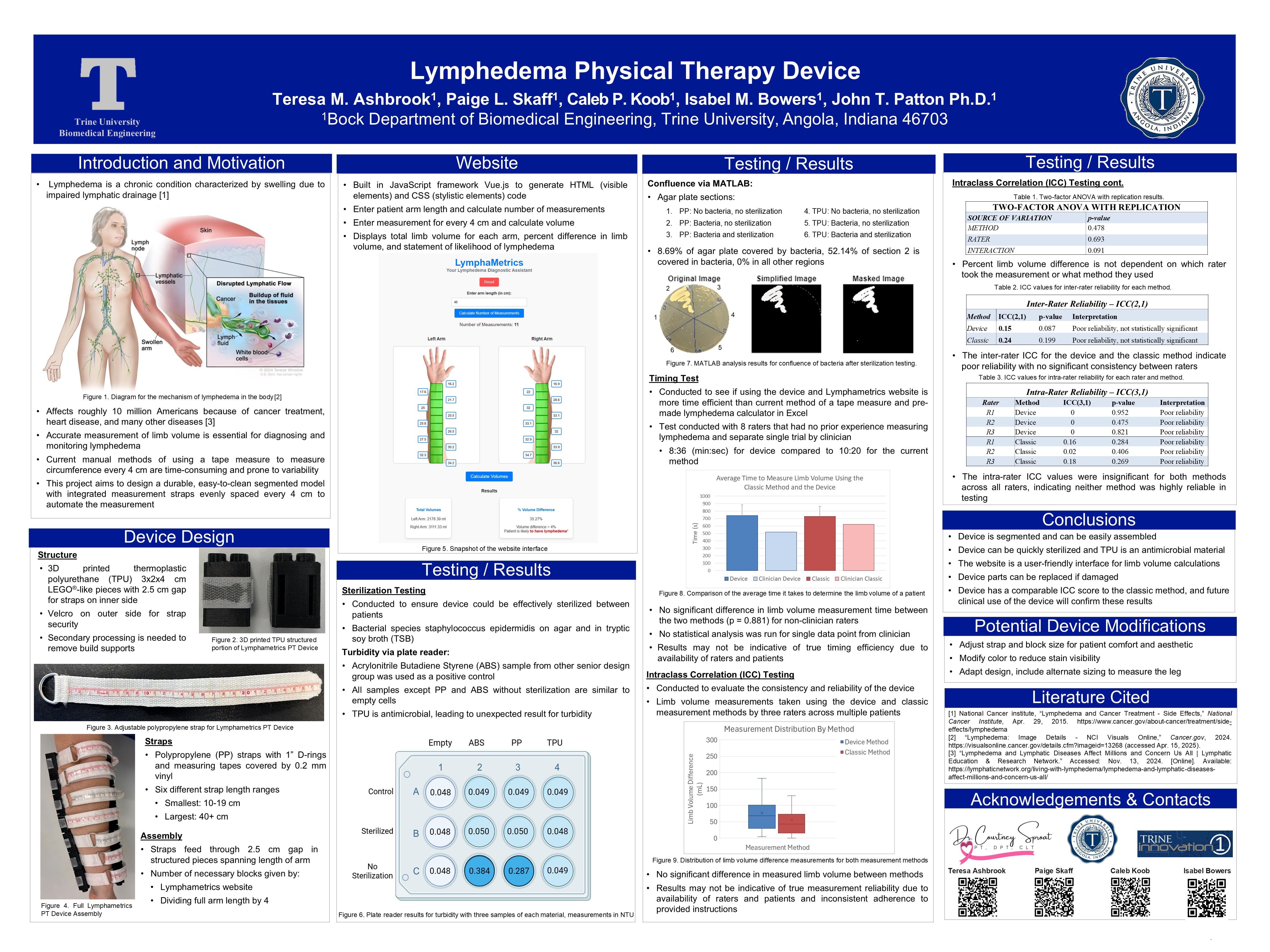
Lymphedema is a chronic condition characterized by swelling due to impaired lymphatic drainage, often arising after cancer treatments. Accurate measurement of limb volume is essential for diagnosing and monitoring lymphadema, but current manual methods using tape measures are time-consuming and prone to variability. This project aimed to design a durable, easy-to-clean segmented model with integrated measurement straps evenly spaced every four centimeters to automate the measurement process, providing more reliable and efficient volume calculations. The proposed device will have intra-rater and inter-rater reliability and accelerate the measurement process, allowing therapists to focus on patient care while standardizing lymphedema management.
Members: Teresa Ashbrook, Isabel Bowers, Caleb Koob and Paige Skaff
Advisor: John Patton, Ph.D.
Sponsor: Dr. Courtney Sproat, PT, DPT, CLT
McKetta Department of Chemical and Bioprocess Engineering
The objective of this study was to analyze the sugar content and type of sugar present in different binders and evaluate their impact on the strength of the sugar-lime bond. By identifying and quantifying the sugars in each binder, we aimed to determine whether the volume of sugar or the specific sugar type plays a more significant role in influencing the bond strength. A comparative assessment of sugar-lime bond strength was conducted for each binder to establish correlations between sugar composition and mechanical performance. The findings of this research provided insights into the fundamental interactions between sugars and lime, contributing to the optimization of binder formulations for enhanced material performance.
Members: Matthew Bates, Nick Bristol and Landon Henderson
Advisor: Jacob Borden, Ph.D.
Sponsor: SDI/Iron Dynamics
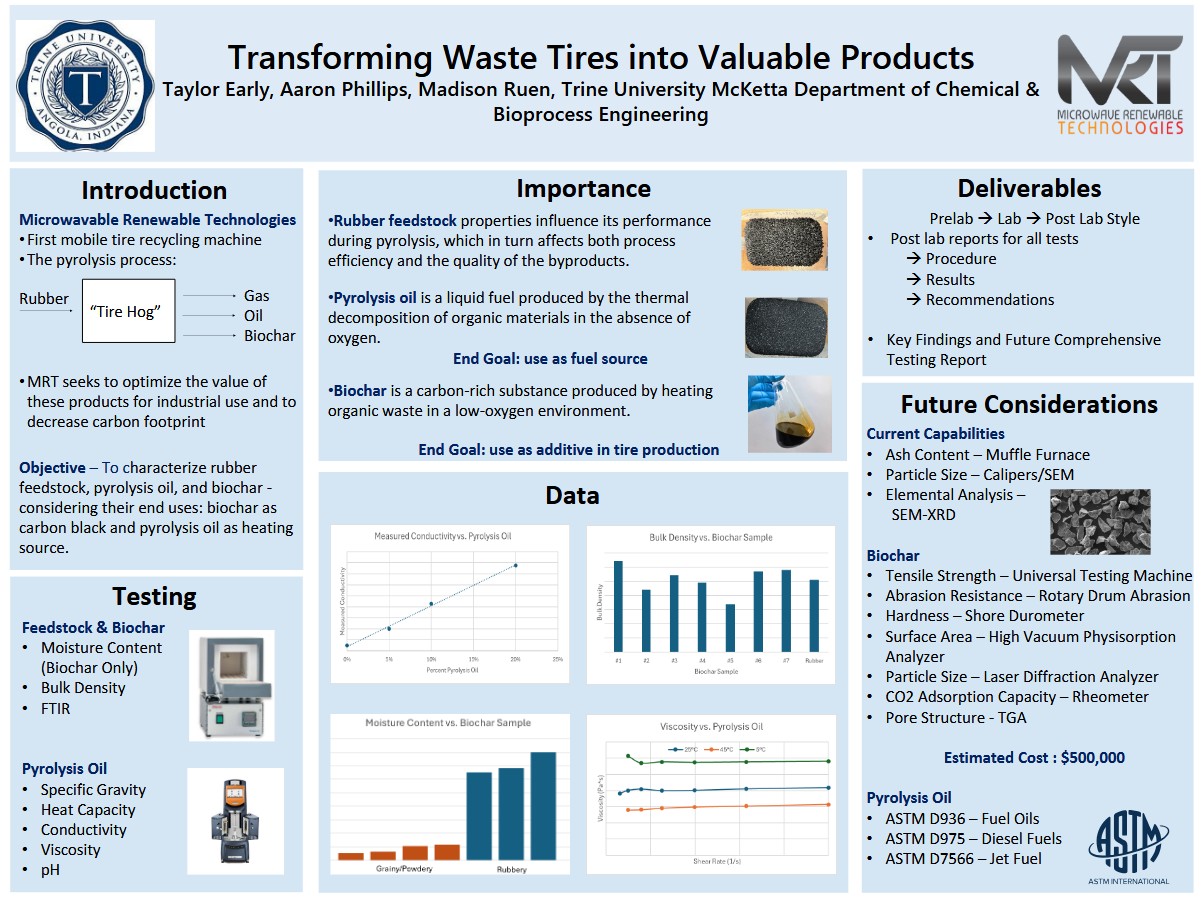
Microwave Renewable Technologies focuses on the transformation of waste tires into valuable products through microwave-assisted pyrolysis. BY characterizing rubber feedstock, pyrolysis oil and biochar, we aimed to optimize their industrial applications while reducing carbon footprints. This project investigated properties such as chemical composition, moisture content and bulk density to enhance the efficiency and sustainability of tire recycling.
Members: Taylor Early, Aaron Phillips and Madison Ruen
Advisor: Jacob Borden, Ph.D.
Sponsor: Renewable Technologies
This project focused on the design of a waste heat recovery system integrated with a metal dryer, aimed at harnessing the excess energy from its exhaust gas stack. By capturing the excess heat that is being lost during the drying process, the waste heat recovery system generates steam, which can then be utilized elsewhere in the process. The ultimate goal was to increase energy efficiency and reduce the overall operational cost.
Members: Ethan McLenon and Parker Reichhart
Advisor: Jacob Borden, Ph.D.
Sponsor: Metal Technologies
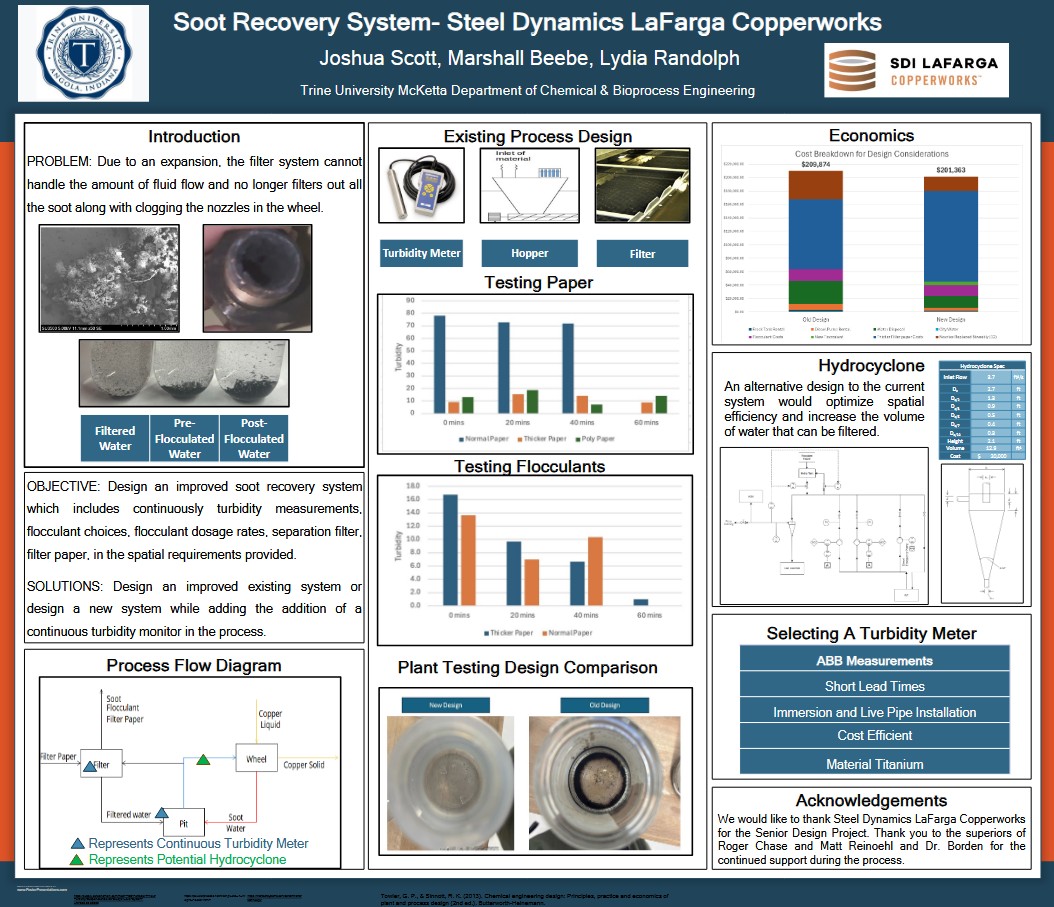
The expansion at Steel Dynamics La Farga Copperworks has exceeded the capacity of the existing soot recovery system, leading to inadequate filtration. This project focused on designing an improved system that integrated continuous turbidity monitoring, while optimizing the existing system with alternatives such as flocculant selection and dosing rates and new filtration paper, or a new cyclone filtration system within spatial constraints. By implementing a durable turbidity meter and refining separation processes, the design aimed to improve soot removal efficiency and reduce maintenance. These improvements provided a cost-effective, scalable solution to enhance system performance and ensure compliance with industry standards.
Members: Marshall Beebe, Lydia Randolph and Joshua Scott
Advisor: Jacob Borden, Ph.D.
Sponsor: SDI La Farga Copperworks
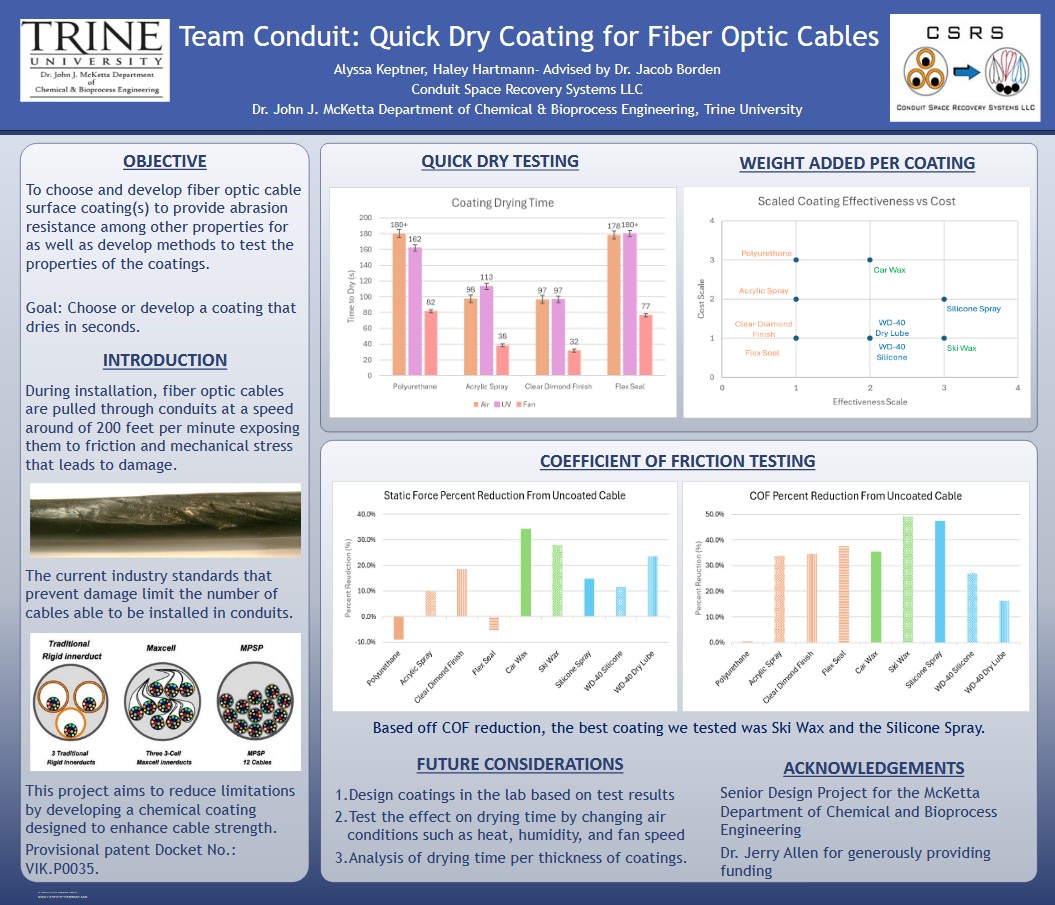
This project focuses on choosing or developing a fiber optic cable surface coating that provides abrasion resistance while being quick drying and providing a low coefficient of friction (COF). Methods were developed to determine coating applications, how quickly the coatings dry and determining the COF. Different commercially available coatings were tested using different methods to find what method and coating dried the quickest.
Members: Haley Hartmann and Alyssa Keptner
Advisor: Jacob Borden, Ph.D.
Sponsor: Dr. Jerry Allen
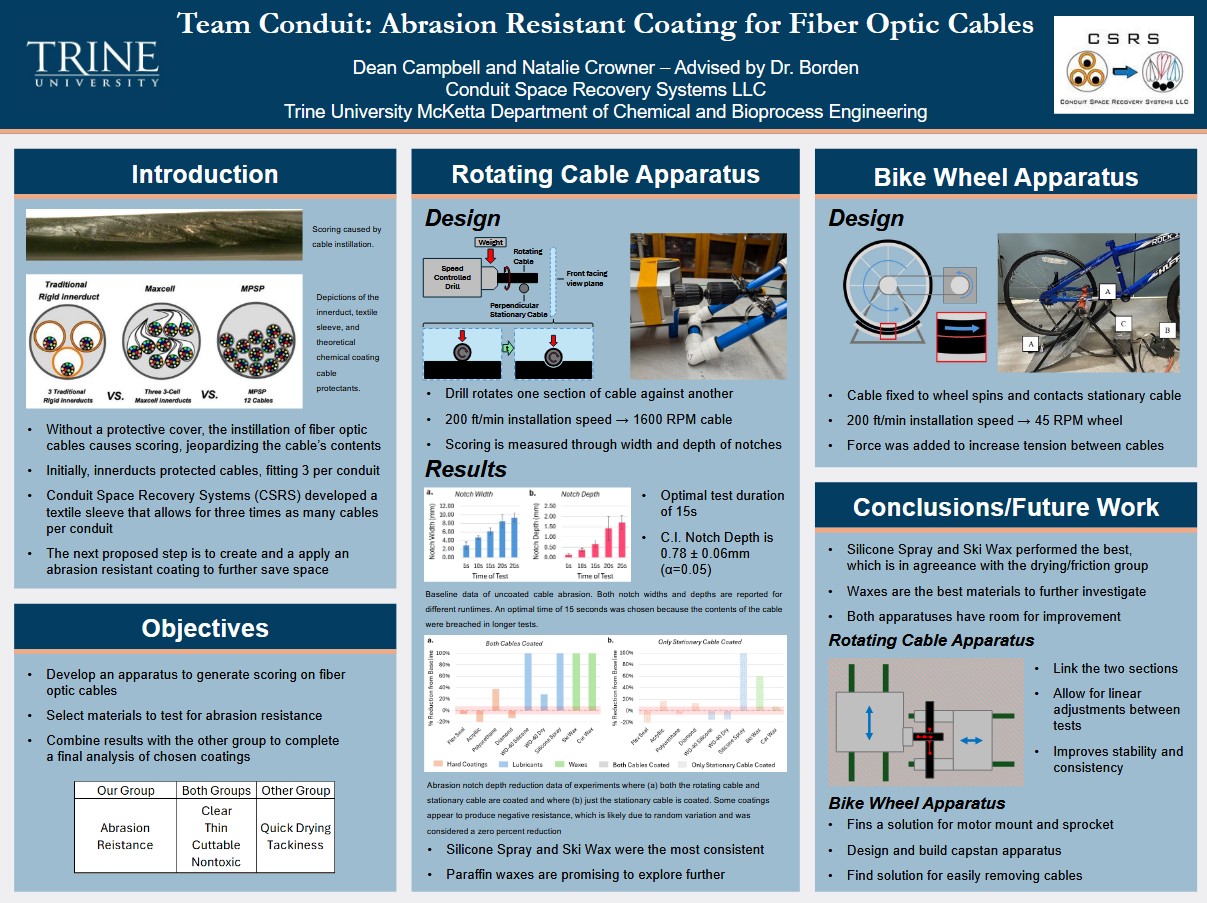
Fiber optic cables incur scoring while being installed unprotected. Conduit Space Recovery Systems sells cable protectants of low thickness to save space within a fiber optic cable conduit and wanted to utilize a chemical coating to further cut down on protectant thickness. We collected data on several different commercially available coatings across many variables including abrasion resistance, friction factor, transparency, quick drying, chemical compatibility and safety. Our group focused on gathering abrasion data from producing friction between two pieces of coated or uncoated cable.
Members: Dean Campbell and Natalie Crowner
Advisor: Jacob Borden, Ph.D.
Sponsors: Conduit Space Recovery, Dr. Jerry Allen
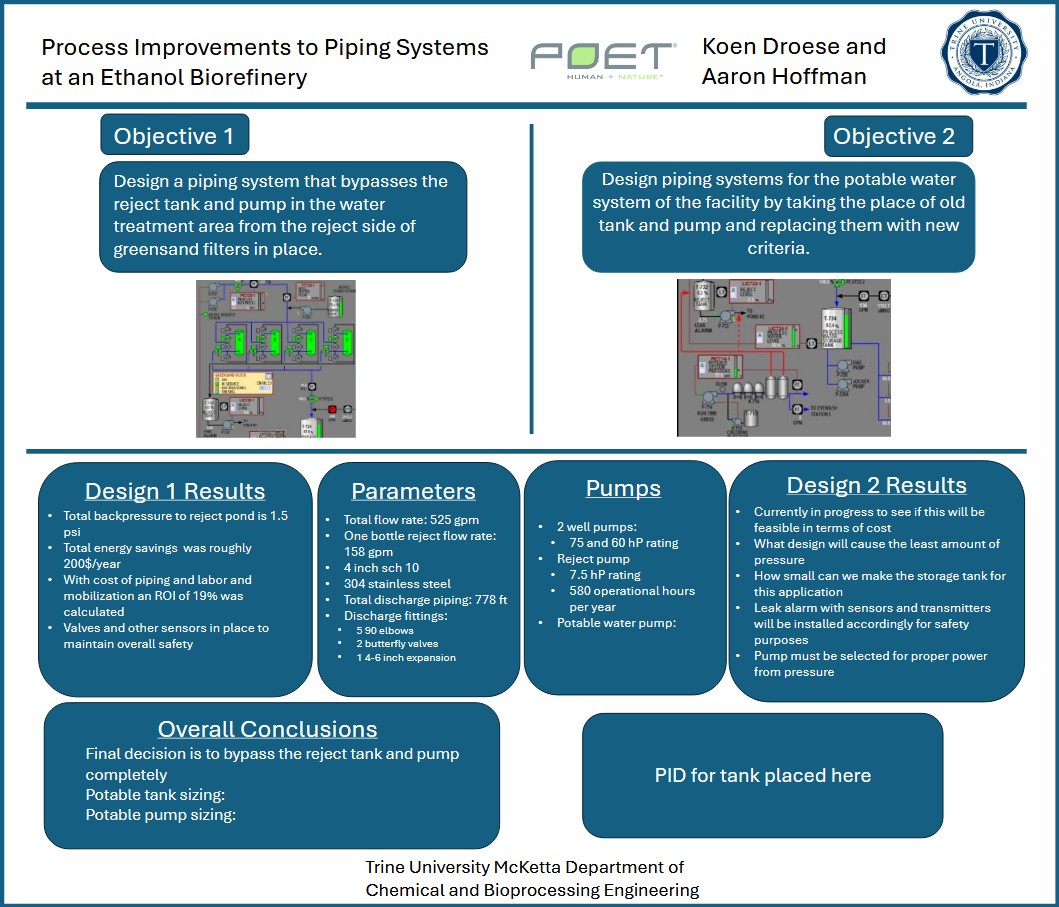
This senior design project for POET focused on automating the transfer of yeast solution from a tote to a yeast propagation tank, streamlining the process through a piped system to improve efficiency and consistency. Another project objective was to optimize the water treatment area by eliminating the reject tank and pump, reducing energy consumption and freeing up valuable space.
Members: Koen Droese and Aaron Hoffman
Advisor: Jacob Borden, Ph.D.
Sponsor: POET Biorefining
Reiners Department of Civil and Environmental Engineering

The City of Angola requested a replacement of an aging water main along Calvary Lane. The City engineers also requested: adding new sidewalks for pedestrian safety and redesigning the existing road, which is also nearing the end of its service life. The project required surveying, pavement design, stormwater drainage analyses and developing a base map and a set of construction plans and profile drawings for the roadway. A railroad crossing along the road provided unique considerations.
Members: Cayden Smith, Nicolas Squillacioti and Ashton Still
Advisor: T.J. Murphy
Sponsor: City of Angola

The Campus RainWorks Challenge is a green infrastructure design competition for American colleges and universities. It seeks to engage with the next generation of environmental professionals, foster a dialogue about the need for innovative stormwater management techniques and showcase the environmental, economic and social benefits of green infrastructure. The Capstone students worked with Trine administration and staff to design sustainable stormwater infrastructure for the ongoing campus growth. The students also created an educational video to highlight their designs.
Members: Emma Beyer, Erin Downing and Sydney Kalinger
Advisor: T.J. Murphy
Sponsors: Trine University, United States Environmental Protection Agency
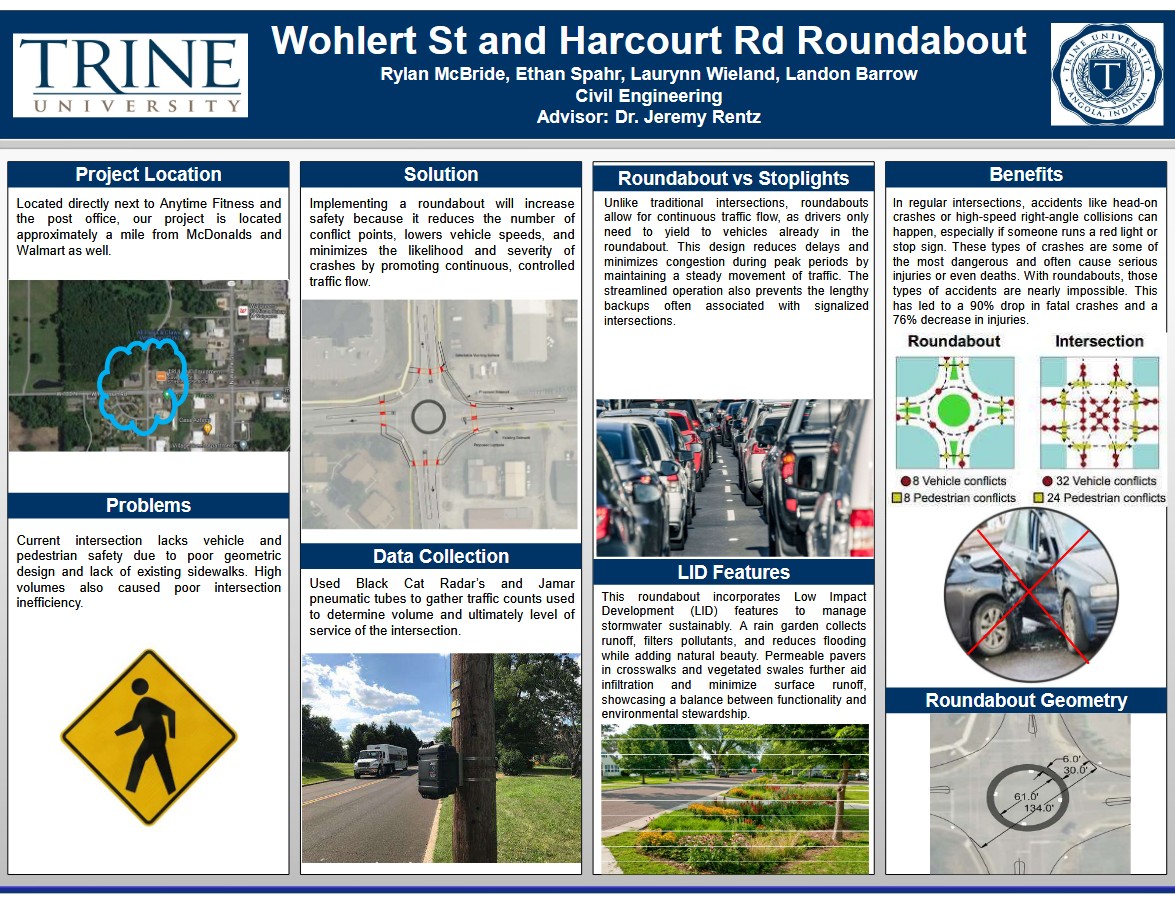
The intersection of Wohlert Street and Harcourt Road in Angola, Indiana, faces inefficiencies, safety issues and inadequate pedestrian infrastructure. This project proposed a single-lane roundabout to improve traffic flow, reduce crashes and integrate sustainable practices. Using traffic data and modeling, the design followed INDOT and FHWA guidelines. Key features include rain gardens, permeable pavers and LED lights for low-impact development. Expected outcomes were enhanced safety, reduced delays and environmental benefits through sustainable urban infrastructure.
Members: Landon Barrow, Rylan McBride, Ethan Spahr and Laurynn Wieland
Advisor: Jeremy Rentz, Ph.D.
Sponsor: Trine University's Reiners Department of Civil and Environmental Engineering
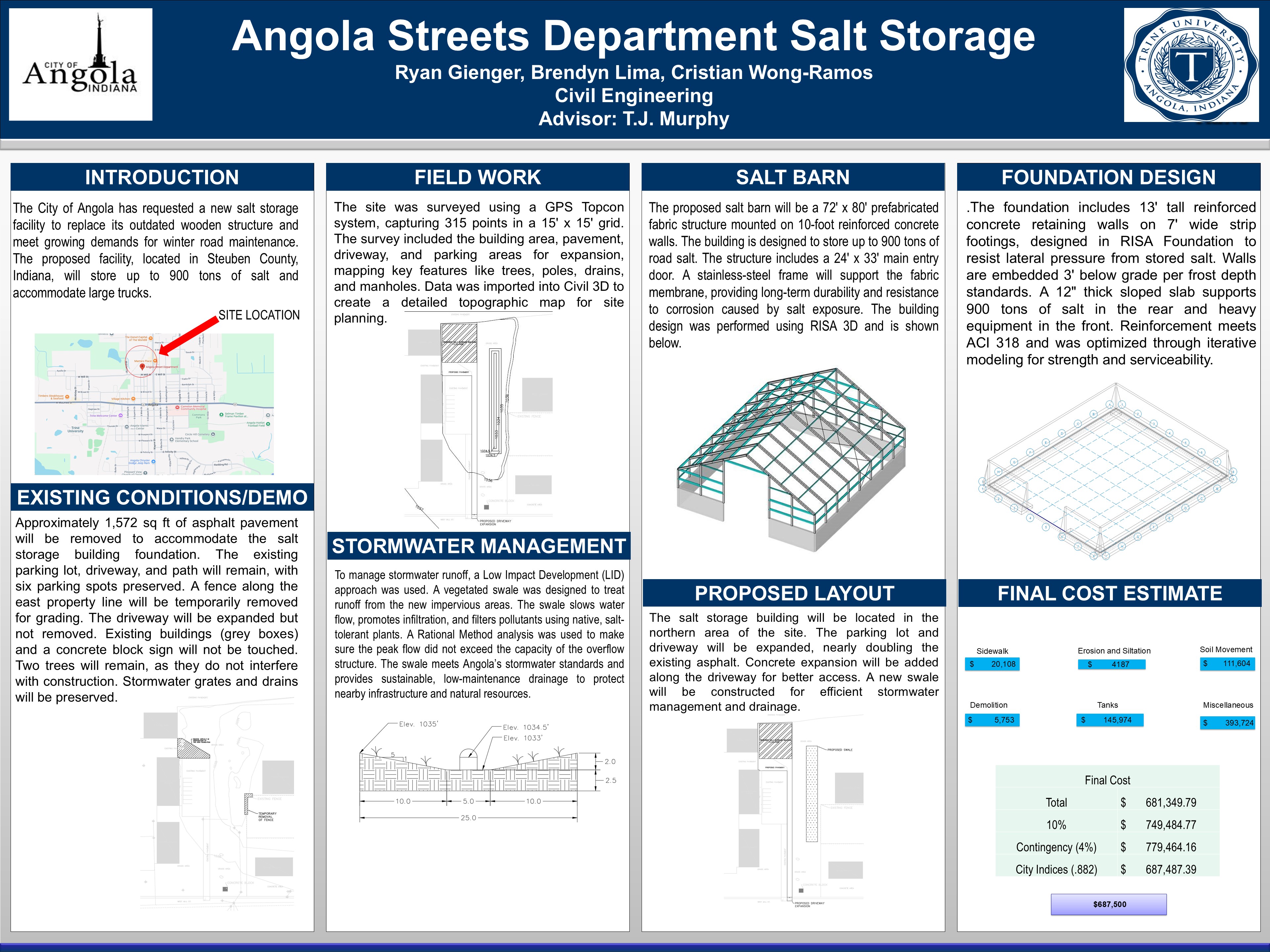
This project was to design a new salt storage facility for the City of Angola Streets Department to meet the city's growing needs for winter road maintenance. The facility will replace outdated wooden structures and was designed to accommodate future city growth. The design incorporated enhancements for operational efficiency, such as widening the driveway to accommodate future truck traffic. Stormwater management was addressed with the integration of a vegetated swale adjacent to the site, which promotes natural infiltration.
Members: Ryan Gienger, Brendyn Lima and Cristian Wong-Ramos
Advisor: T.J. Murphy
Sponsor: City of Angola Street Department
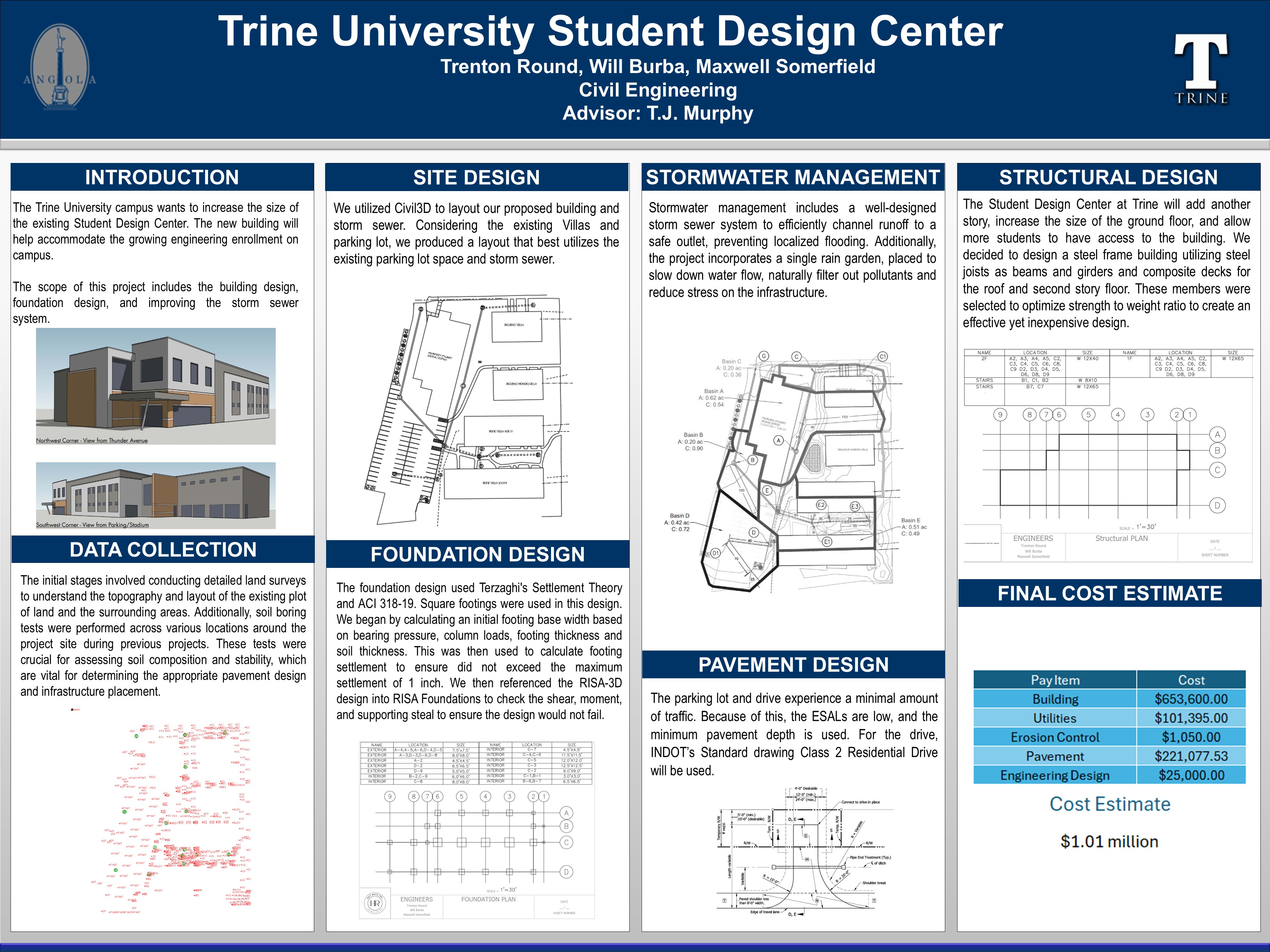
Trine University plans to build a new Student Design Center (SDC) to have a larger and more versatile facility than the existing SDC. At the start of this project, the location of the new SDC was undetermined, so for this project, students designed a new, larger facility, at the location of the existing SDC. The project required surveying, structural analysis and design, foundation design, stormwater management and site planning.
Members: William Burba, Trenton Round and Maxwell Somerfield
Advisor: T.J. Murphy
Sponsor: Trine University
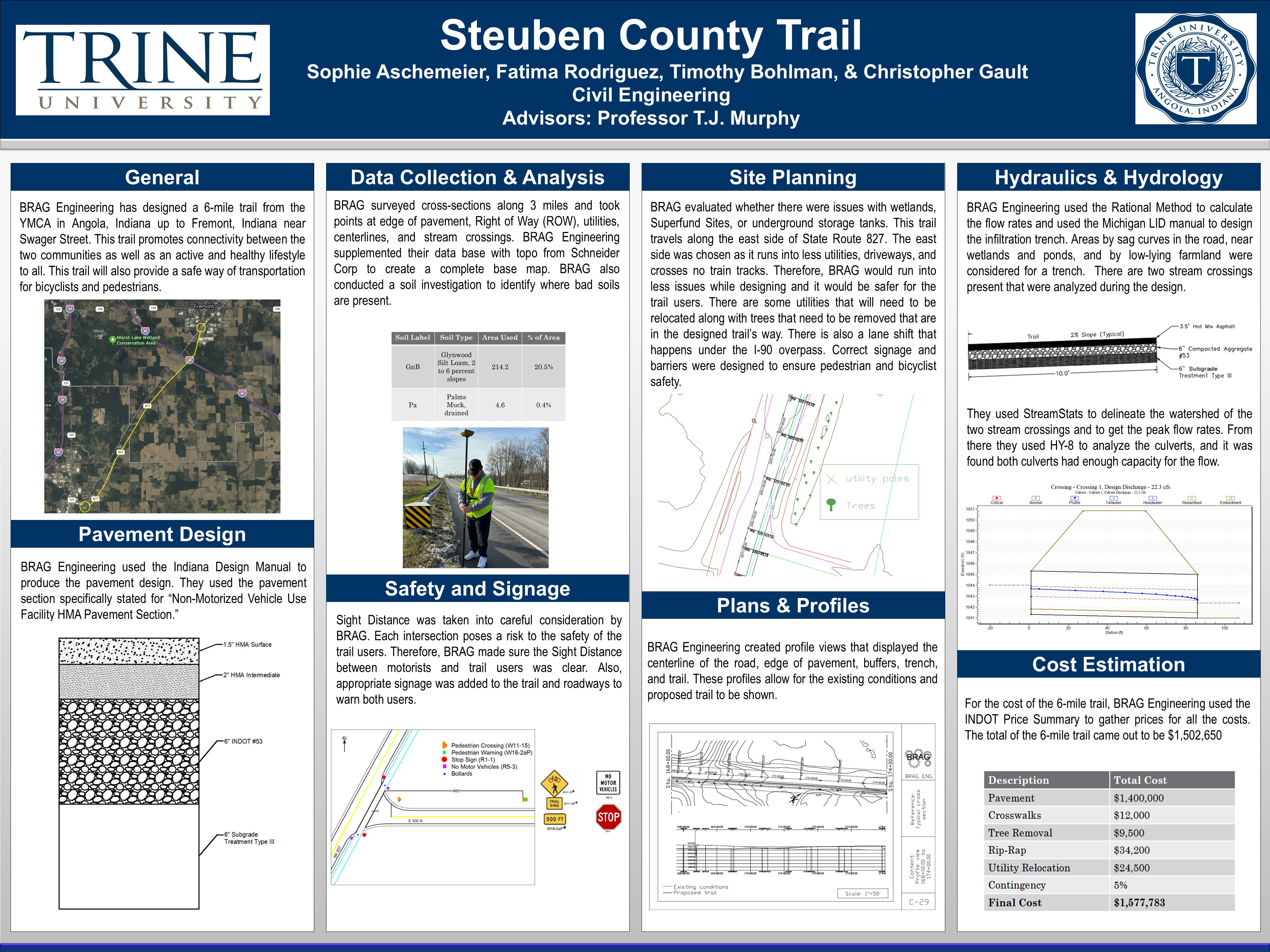
This project was the comprehensive design of a six-mile multi-use trail connecting Angola and Fremont along State Road 827. The trail addresses the critical need for safe, non-motorized pathways in Steuben County. This trail will enhance community connectivity, promote active lifestyles and support environmental sustainability. The design included surveying and creating a base map, pavement design, site development and stormwater management. The project also required the analysis and design of extensions to the existing stormwater culverts underneath the road.
Members: Sophia Aschemeier, Timothy Bohlman, Christopher Gault and Fatima Rodriguez
Adivsor: T.J. Murphy
Sponsor: Steuben County
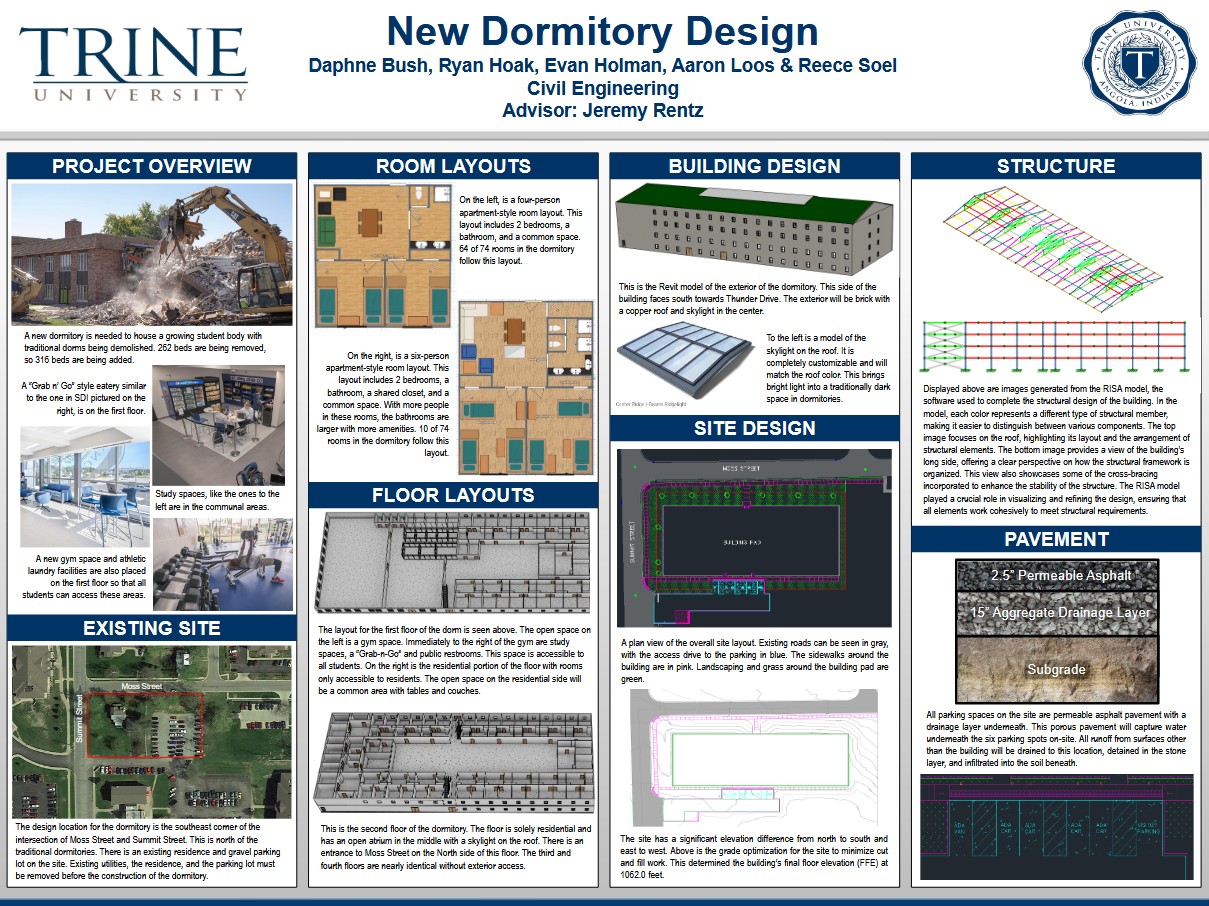
Trine University's growing enrollment necessitated the design of a 316-bed dormitory featuring residential and public amenities, including a gym, study areas and Grab 'n Go dining. This four-story, steel-framed structure includes a skylight-lit atrium, stormwater systems with pervious pavement and off-site conveyance, helical pier foundations and efficient site grading. Using RISA3D and Civil 3D, the team optimized structural stability, drainage and layout while adhering to ASCE and IBC standards. The project enhanced campus infrastructure and supported future growth.
Members: Daphne Bush, Ryan Hoak, Evan Holman, Aaron Loos and Reece Soel
Advisor: Jeremy Rentz, Ph.D.
Sponsor: Trine University's Reiners Department of Civil and Environmental Engineering
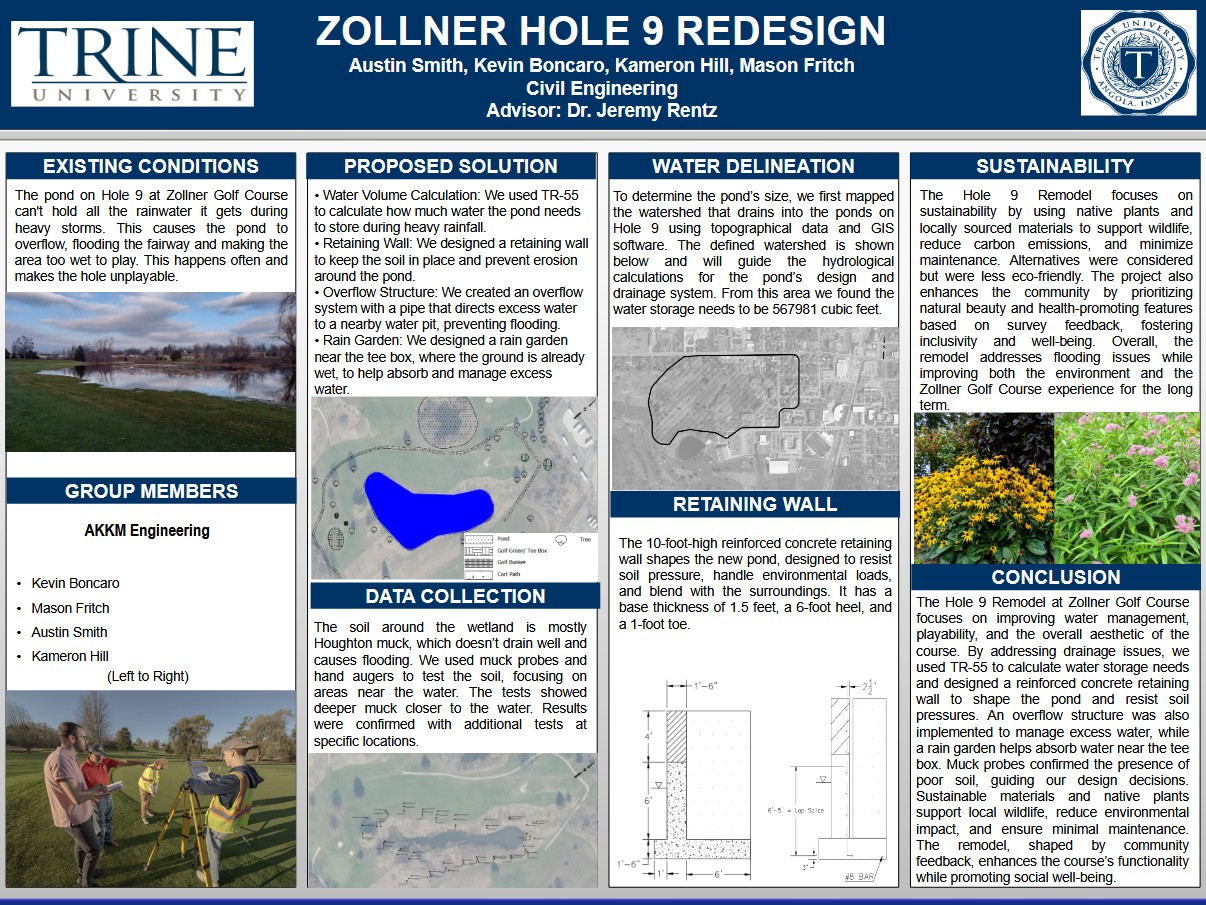
Frequent flooding on Hole 9 of Zollner Golf Course disrupts playability. Our project redesigned the pond with a reinforced retaining wall to increase storage capacity and added an overflow system to handle excess water. A rain garden near the tee box manages runoff and supports local ecosystems. Soil testing revealed poor drainage, guiding our design decisions. By using native plants and sustainable materials, we reduced environmental impact and maintenance needs. This redesign improved drainage, enhanced playability and promoted long-term sustainability.
Members: Kevin Boncaro, Mason Fritch, Kamron Hill and Austin Smith
Advisor: Jeremy Rentz, Ph.D.
Sponsor: Trine University's Reiners Department of Civil and Environmental Engineering
Department of Computer Science and Information Technology

Community Flags is a nonprofit that deploys flags in various locations during certain holidays. The team automated the process of signing up for users and streamlined management.
Members: Anthony Czerniak, Cody Rhodes and Rayne Snyder
Advisor: David Corcoran
Sponsor: Community Flags
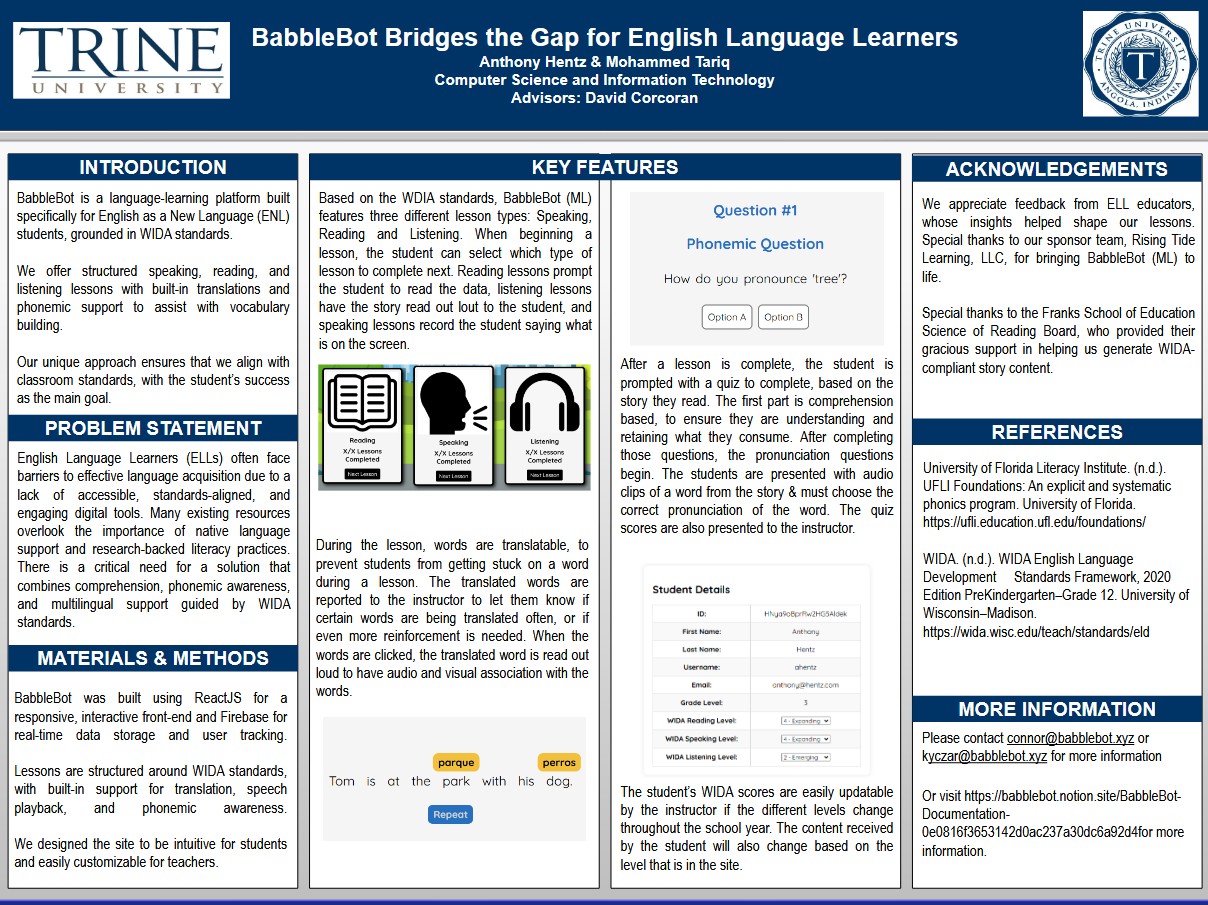
BabbleBot was a senior design project last year that branched off into its own company under the control of last year's students. This year, the project returned to help young students, but it was focused on those in school learning English as a new/second language. Still using the same Science of Reading principles, BabbleBot ML (multi-language) aimed to provide English learners the same great experience.
Members: Anthony Hentz and Mohammed Tariq
Advisor: David Corcoran
Sponsor: Rising Tide Learning LLC
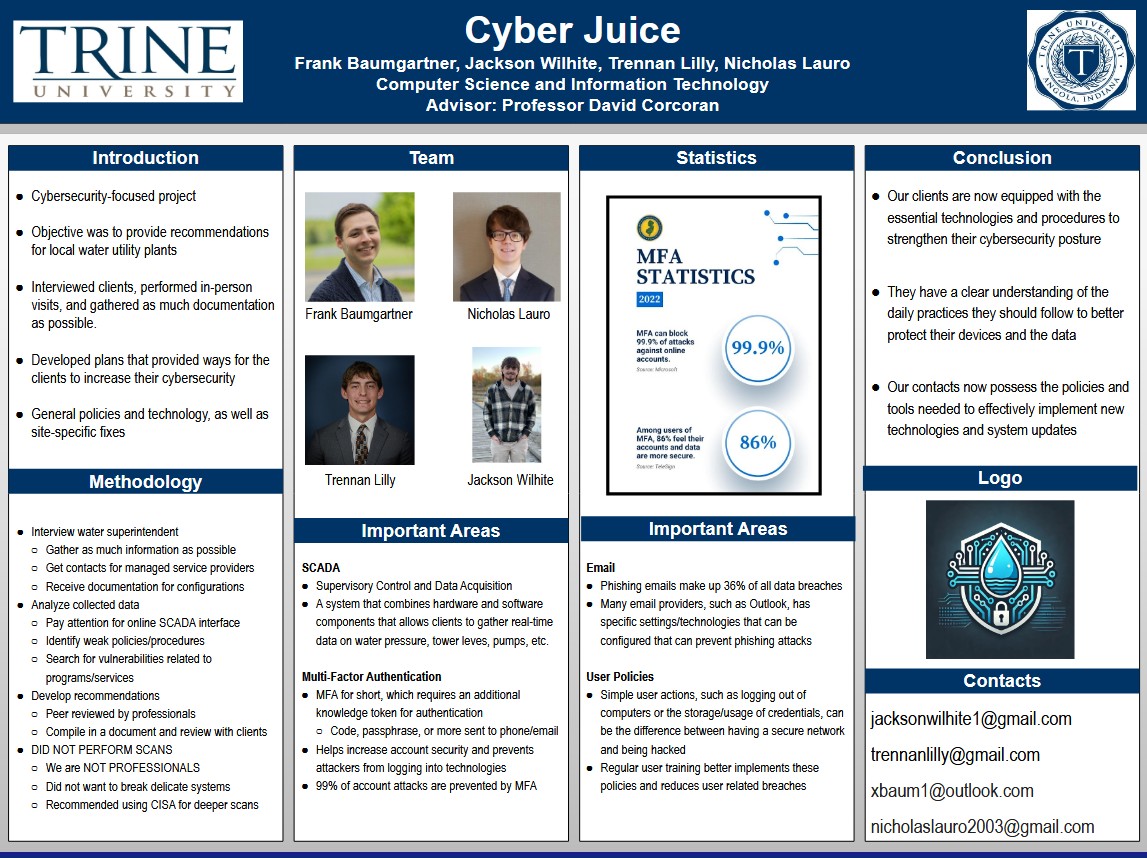
The purpose of our senior design project team, designated "CyberJuice," was to evaluate the physical and digital security of four different water treatment plants in the surrounding area of Trine University. By performing site visit, research and correspondence with the water superintendents and their tech providers, we developed documentation and discovered funding opportunities which can increase the defenses of these locations.
Members: Frank Baumgartner, Nicholas Lauro, Trennan Lilly and Jackson Wilhite
Advisor: David Corcoran
Sponsor: Regional Water and Wastewater Utilities
Franks School of Education was in need of a new software for their accreditation program due to the last one being shut down. The goal was to build software from the ground up to meet their needs and wants.
Member: Justin Layne
Advisor: David Corcoran
Sponsor: Trine University's Franks School of Education
Department of Design Engineering Technology
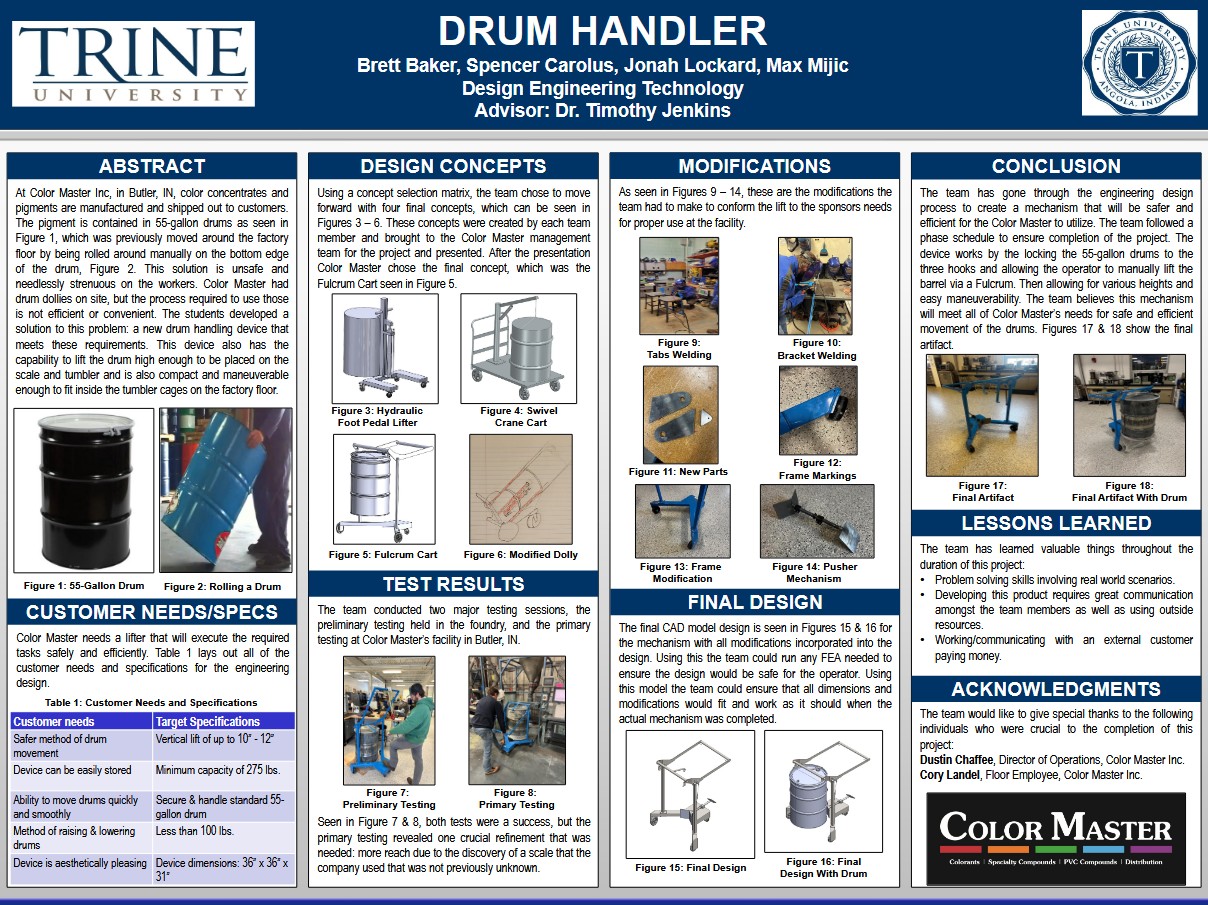
At Color Master in Butler, Indiana, color pigments and concentrates are prepared and mixed in 55-gallon drums. These drums are currently moved around the factory floor by being rolled around on the drum edge. This solution is strenuous on the workers and at times unsafe. Drum dollies that are available are less efficient and inconvenient to use. The design team developed a solution by creating a drum-handling device that is capable of lifting the drum high enough to be placed on a scale or tumbler as well as compact and maneuverable enough to move over rough floors and fit inside the tumbler cage.
Members: Brett Baker, Spencer Carolus, Jonah Lockard and Maxim Mijic
Advisor: Tim Jenkins, Ph.D.
Sponsor: Color Master Inc.
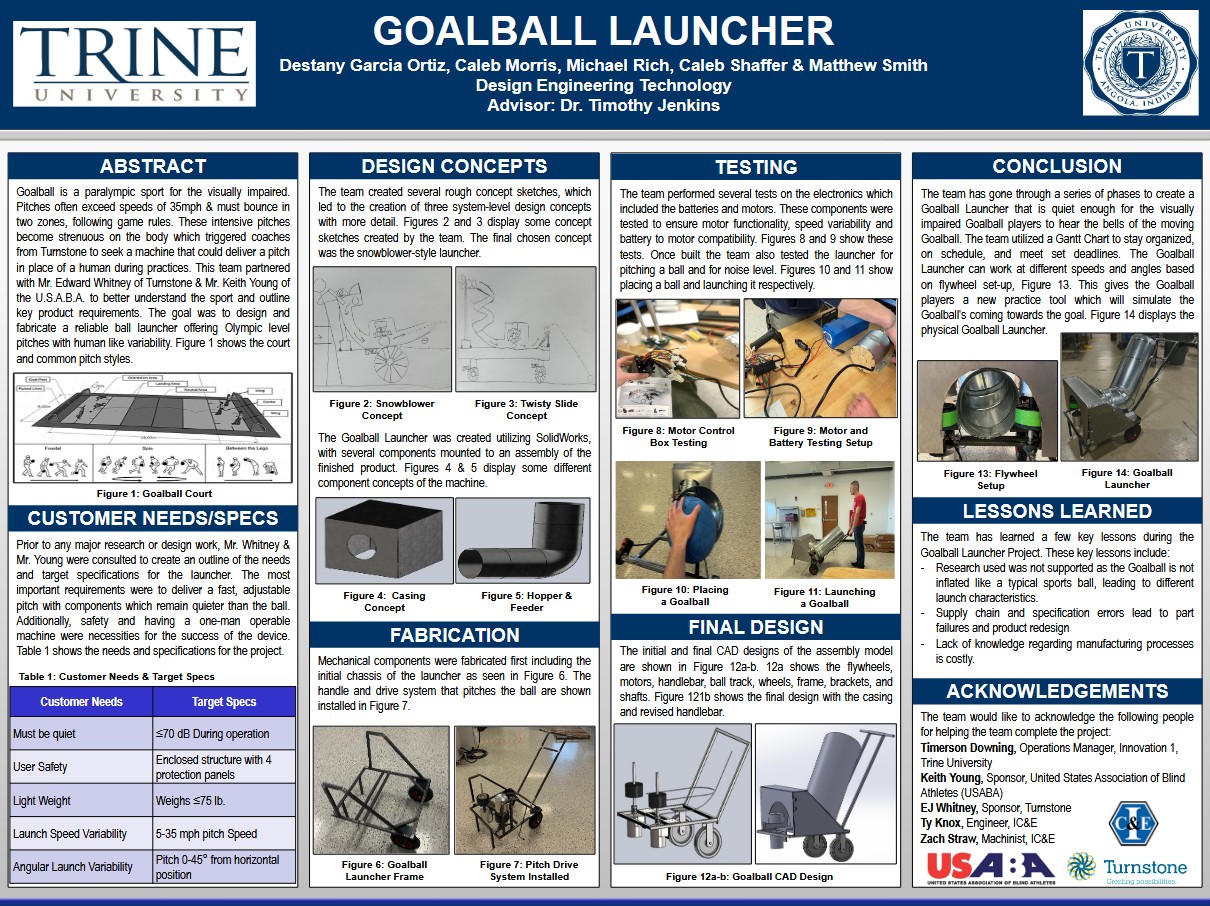
Goalball is a Paralympic sport for visually impaired athletes in which a rubber ball with bells inside is thrown down a court, bouncing twice, with the hope of going into the opposing team's goal. The design team was tasked with designing a practical machine that could throw the goalball properly to improve practice efficiency but also help athletes improve skills by delivering simulated human pitches across the court. The major concern for the machine is that it must be almost whisper quiet, as the game involves players being able to hear the ball coming toward them and the goal.
Members: Destany Garcia-Ortiz, Caleb Morris, Michael Rich, Caleb Shaffer and Matthew Smith
Advisor: Tim Jenkins, Ph.D.
Sponsors: Trine InnovationOne, Turnstone, USA Goalball

The project's aim was to design and build a human-powered rover vehicle fro the NASA Human Exploration Rover Challenge competition, piloted by one male and one female astronaut. The rover had to fit within a 5 ft x 5 ft x 5 ft box to simulate transport to the Earth's moon, weigh less than 170 pounds and maintain a one foot clearance for pilot safety. The design had to traverse various obstacles that simulated terrain on other planets including rocky surfaces, slopes and loose gravel. Pilots also had a time limit of eight minutes to complete the course based on simulated oxygen reserves.
Members: Juan Arroyo, Bailey Bravata, Grace Captain, Braden Duncan, Allen Jones, Dominic Skinner, Kevin Sorensen and Evan Sosinsky
Advisor: Tim Jenkins, Ph.D.
Sponsor: Trine University's Department of Design Engineering Technology
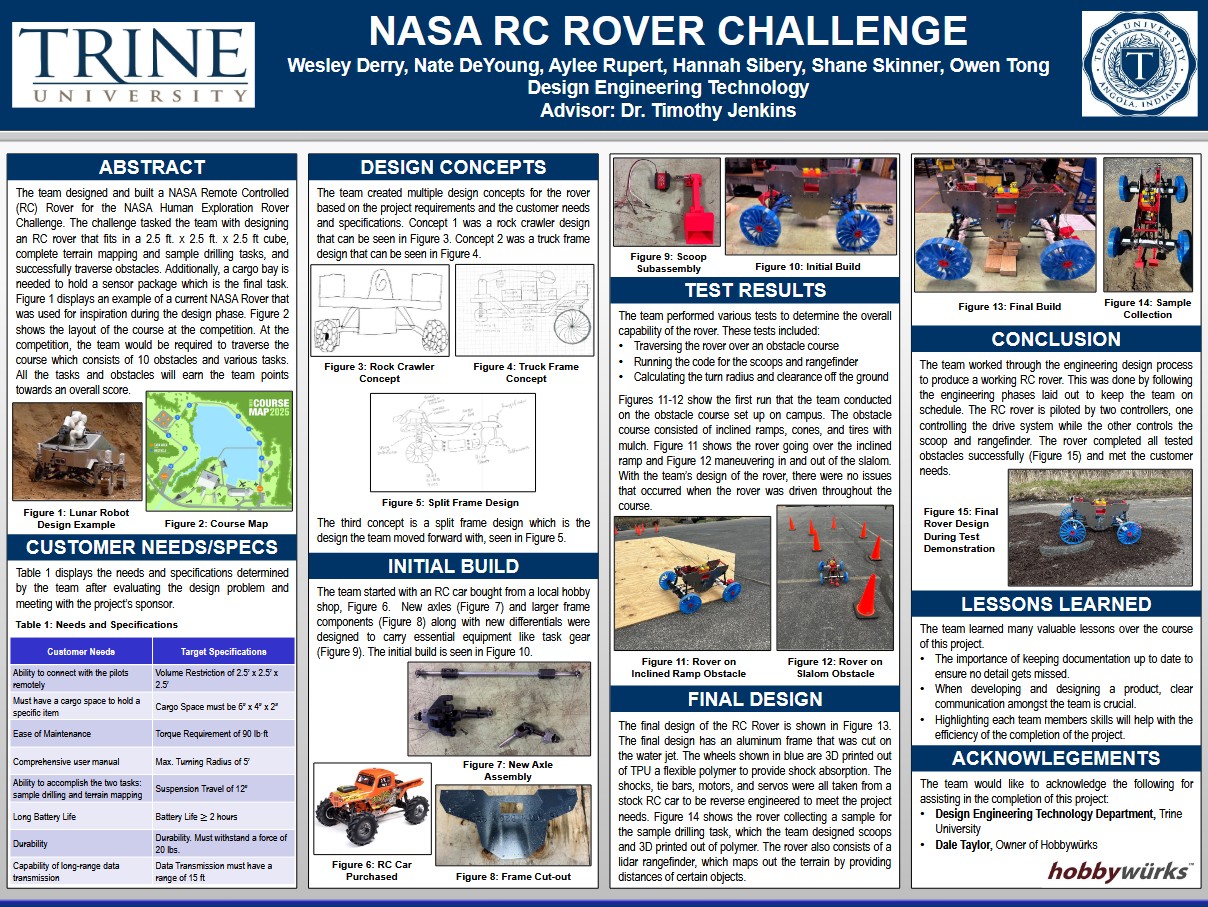
The team designed and built a remote-controlled rover robot for the NASA Human Exploration Rover Challenge. The challenge tasked the team with creating a remote-controlled rover that fits in a 2.5 ft x 2.5 ft x 2.5 ft cube, weights less than 30 pounds and is battery-powered. The robot had to complete terrain mapping and sample collecting tasks while traversing several obstacles including slopes, rocky terrain, a slalom and crevasses. Lastly, a cargo bay was needed to hold a sensor package which was the final task. All of the tasks and obstacles had to be completed in an eight-minute time window.
Members: Wesley Derry, Nathan DeYoung, Aylee Rupert, Hannah Sibery, Shane Skinner and Owen Tong
Advisor: Tim Jenkins, Ph.D.
Sponsor: Trine University's Department of Design Engineering Technology

The Indiana Department of Transportation (INDOT) uses a simple tow-behind machine to spread asphalt directly from a dump truck to patch roads without needing specialized resurfacing equipment. One challenge with this design is width, which poses a safety hazard when transported to a job site. The design team reimagined the spreader to be lighter, collapsible and easier to build. The team added better jacks, a rack-and-pinion gear drive and collapsible catwalks to meet these goals. The spreader is adjustable from 8-12 feet, which allows for safe transport while providing expandability for lane width work.
Members: Hunter Borski, Madison Kasten, Jared Neireiter, Philip Nemecek and Ryan Schamp
Advisor: Tim Jenkins, Ph.D.
Sponsor: Indiana Department of Transportation Innovation Department

The Dynamic Design Group redesigned a 10 inch vibratory bowl feeder drive unit using an original design given by the sponsor, Moorfeed. The unit used two magnetic coils that caused the steel leaf springs attached to the units' cross-arm to vibrate. This vibration transferred to the attached stainless steel bowl, causing the small parts in the bowl to orient and move. The drive unit base and lugs were made of plain carbon steel. The redesign corrected faults in the current design, including binding within the leaf springs, stress around the bolt holes, excess weight and stress within the cross-arm.
Members: Patrick Cahill, Ethan Killeen, Clayton Schenkel, Gage Semple and Joshua Virgil
Advisor: Tim Jenkins, Ph.D.
Sponsor: Moorfeed Corporation
Department of Electrical and Computer Engineering
The Omni-Directional Kart is a small sled with wheels that can carry 200 pounds and can move in any direction without turning the vehicle by use of joysticks for control. The Kart's speed will be shown on a display with a maximum speed of 15 mph.
Members: Grant Deaton, Frank Monnig, Michael Richer and Angel Rodriguez
Advisor: Kevin Woolverton, Ph.D.
Sponsor: Trine University's Department of Electrical and Computer Engineering

The Collegiate Robotic Football Conference (CRFC) holds an annual competition at various locations. Teams from different schools design, build and program robots to compete. For our project, we developed two concepts: a kicker robot and an aim-assistance system for the quarterback and receiver. The kicker robot was user-controlled and used for kickoffs and field goals. The aim-assistance system used a webcam to detect the receiver, rotate the quarterback and calculate the throw power based on distance.
Members: Brayden Amoroso, Caden Daffron, Nathan Del Guanto and Shane Wood
Advisor: Sean Carroll, Ph.D.
Sponsor: Trine University's Department of Electrical and Computer Engineering

We developed a smart charging station for a robotic lawn mower with multiple features. It hosted a web interface for monitoring and control, detected rain to ensure safe charging and included a camera to capture images of the robot. This innovative design enhances user experience, providing real-time information and improved maintenance capabilities.
Members: Shaif Ahmed, Ethan Bowers and Simon Elliott
Advisor: Sean Carroll, Ph.D.
Sponsor: Trine University's Department of Electrical and Computer Engineering

We designed a fully autonomous mower capable of navigating a user-defined area and returning to its base station when mowing is complete or the battery requires charging. The mower used sensors to detect objects and avoid collisions, ensuring safe operation. Its body was constructed from a 2 ft x 2ft, 5/8-inch-thick wooden plank. The mower communicated with a base station, which hosted a website interface providing real-time updates, including battery charge status, mowing progress and a start/stop control for user convenience.
Members: Nathan Leap, Joseph Packard and Kaleb Schaf
Advisor: Sean Carroll, Ph.D.
Sponsor: Trine University's Department of Electrical and Computer Engineering
The Self-Balancing Skateboard is a personal electrical vehicle featuring a single central wheel surrounded by an aluminum frame. Riders can control movement by shifting their weight forward or backward depending on the desired direction. There is a companion mobile app that displays speed, battery life and mileage feedback while also allowing users to customize settings such as max speed and LED lighting. The Self-Balancing Skateboard offers riders a convenient and customizable ride adept for urban travel.
Members: Clay Kirkpatrick, Brandon McCraner, Micah Mumaw and Francesca Queary
Advisor: Andrea Mitofsky, Ph.D.
Sponsor: Steel Dynamics
The Sumo Robot is an autonomous robot designed to meet the requirements to compete at the NRC's 2025 Sumo robotics competition. The robot had to fit in a 20" x 20" x 20" box and weigh less than 20 pounds. The robot had to be battery powered and have a sensor array that allows it to locate and push an enemy sumo robot out of the competition ring. The robot won first place at the competition.
Members: Philip Burney, Malachi Henry and Logan Martin
Advisor: Kevin Woolverton, Ph.D.
Sponsor: Trine University's Department of Electrical and Computer Engineering
Wade Department of Mechanical and Aerospace Engineering

The SDI Copperworks plant produces copper wire using a rotating circular mold, which constantly takes in molten metal from one side and puts out one long bar of copper. In order to keep the copper from sticking to the mold and to insulate the mold from the heat of molten metal, they coat the mold in a fine layer of soot by burning acetylene directly onto the mold. This process creates a lot of extra soot which escapes into the air as smoke. As part of a new cleanliness initiative, Copperworks asked us to design a system which can capture escaping soot and filter it out of the air.
Members: John Englund, Nathan Goossen, Alex Kratzer, Grant Swain and Logan Wagler
Advisor: Gurudutt Chandrashekar, Ph.D.
Sponsor: SDI La Farga Copperworks
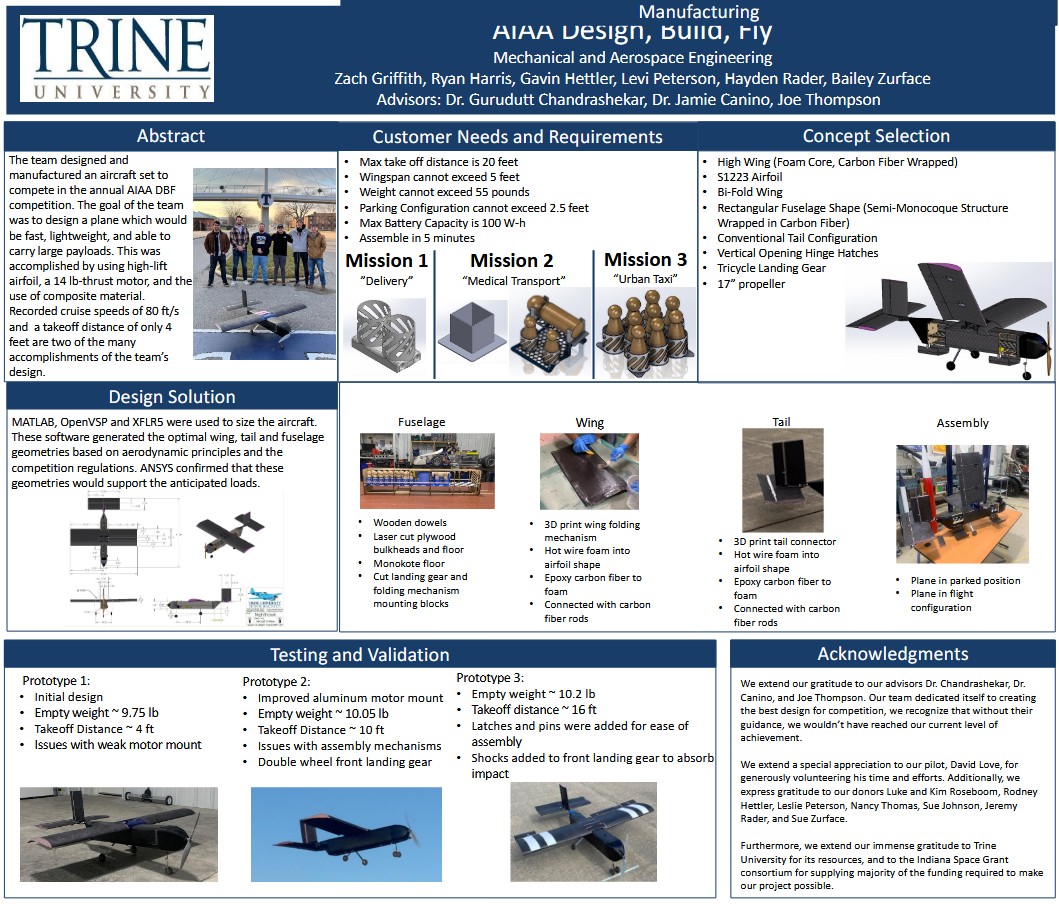
The goal of this project is to design and build an RC aircraft capable of successfully completing the missions outlined by the AIAA for the 2024-2025 competition. The objective is to complete an X-1 Supersonic Flight Test Program, including one ground mission and three flight missions - delivery flight, captive carry flight and launch flight. To accomplish this objective, the team reviewed requirements, developed and finalized a design, and tested various iterations. Cabor fiber was utilized in many components because of its significant weight reduction and high strength.
Members: Hailey Budney, Dillon Dennison, Matthew Edison, Bryan Maida, Nathan Mast, Ryan McDonald and Cassidy Victor
Advisors: Jamie Canino, Ph.D., Gurudutt Chandrashekar, Ph.D. and Joseph Thompson II
Sponsor: Indiana Space Grant Consortium

The AIMM-IC team was challenged to build a boat that runs by itself to complete a series of challenges ranging from buoy slalom courses to picking up objects in the water. The boat needed to run without any human or remote-control intervention, while completing the challenge course faster than other college competitors. To complete the tasks, subsystems were designed to allow full functionality of the boat, all backed by autonomous and mechatronics programs. The Trine team consisted of six students to make the project possible: two ME students, two DET students, one MRE student and one CSIT student.
Members: Kenesaw Cramer, Maxwell Harris, Sterling Haylett, Matthew Jimenez, Jackson Sherwood and John Wrachford
Advisor: Rizacan Sarikaya, Ph.D.
Sponsor: Naval Surface Warfare Center - Crane Division
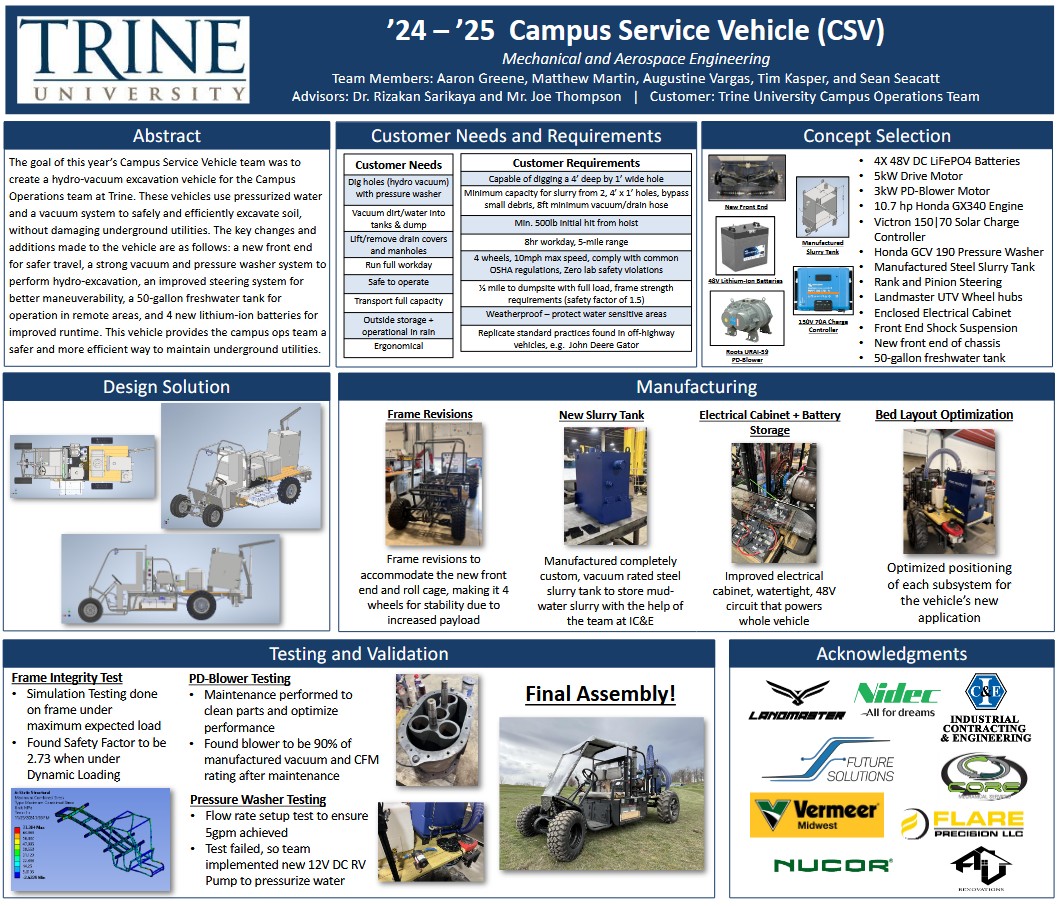
The goal of this year's Campus Service Vehicle team was to create a hydro-vacuum excavation vehicle for the Campus Operations team at Trine. These vehicles use pressurized water and a vacuum system to safely and efficiently excavate soil without damaging underground utilities. The team's design featured a new front end for safer travel, a strong vacuum and pressure washer system to perform hydro-excavation, and an improved steering system for better maneuverability in remote areas. This vehicle provided the Campus Ops team a safer and more efficient way to maintain underground utilities.
Members: T. Aaron Greene, Timothy Kasper, Matthew Martin, Sean Seacatt and Augustine Vargas
Advisor: Rizacan Sarikaya, Ph.D.
Sponsors: A.V. Renovations and Property Management of Hammond, IN, Buhrt Engineering, Trine University's Environmental Services and Transportation, Vermeer of Central Illinois
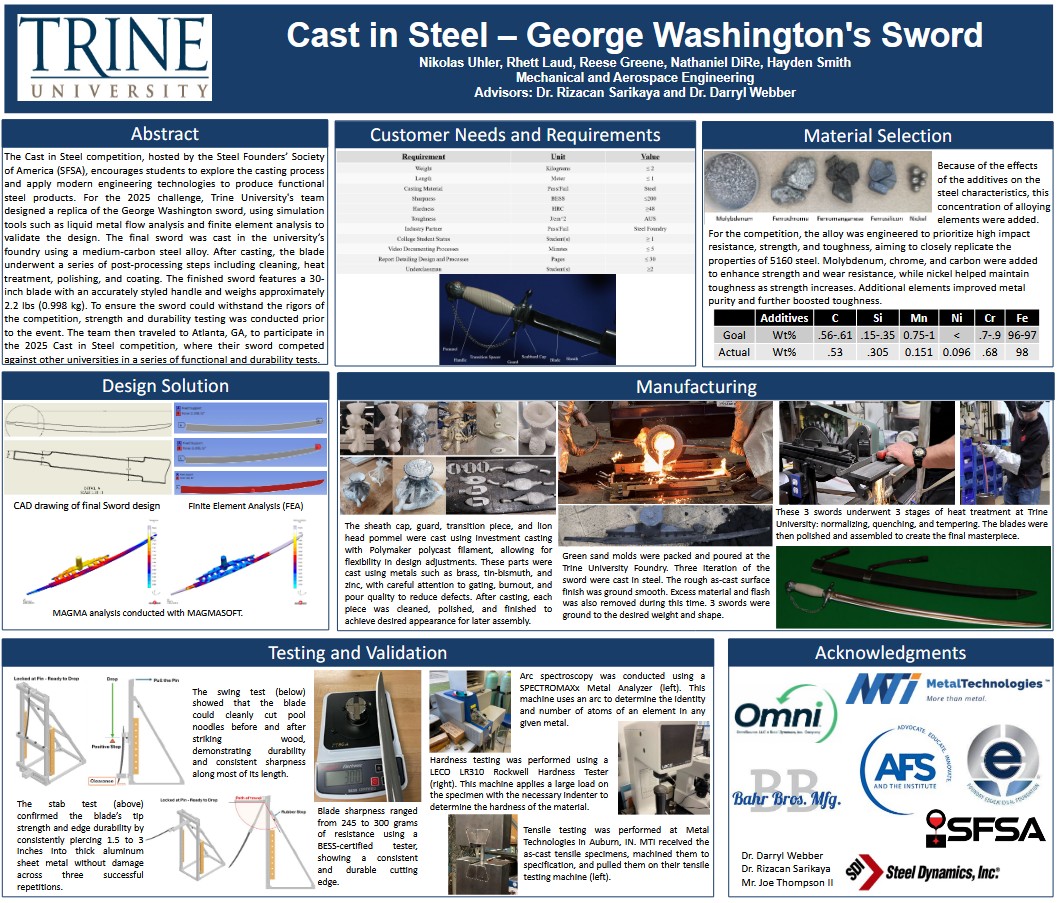
Students participated in the Cast in Steel competition, hosted by the Steel Founders' Society of America (SFSA), to design and manufacture a functional sword using the steel casting process. A replica of George Washington's Cuttoe sword was created using simulations and mechanical testing to ensure strength and durability. With support from local foundries, the sword was cast at Trine University. The final product underwent rigorous testing before the team participated in the 2025 competition in Atlanta, demonstrating its functionality.
Members: Nathaniel DiRe, Alexander (Reese) Greene, Rhett Laud, Hayden Smith and Nikolas Uhler
Advisors: Rizacan Sarikaya, Ph.D. and Darryl Webber, Ph.D.
Sponsors: American Foundry Society (AFS), Bahr Brothers, Foundry Education Foundation (FEF), Metal Technologies, Omni Source, Steel Dynamics, Trine University's Mechanical Engineering Cast Metal Advisory Board
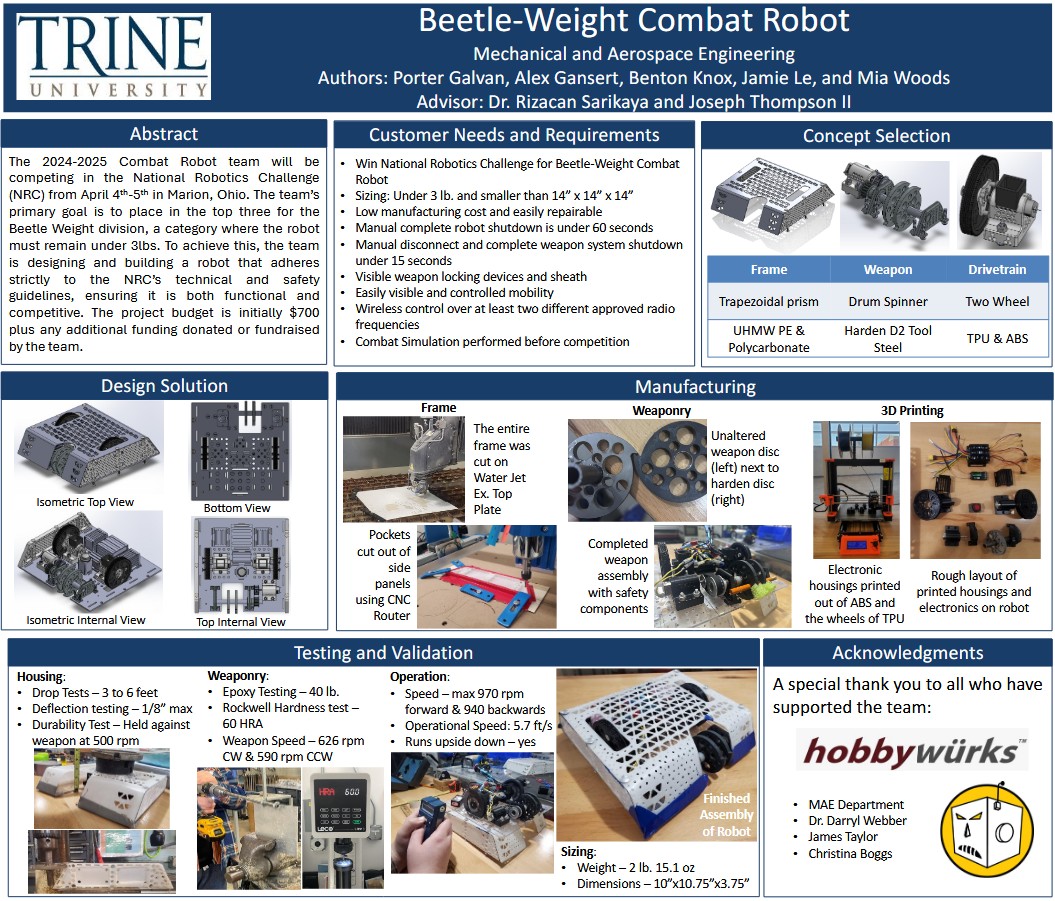
The 2024-2025 Combat Robot team competed in the National Robotics Challenge (NRC) from April 4-5, 2025 in Marion, OH. The team's primary goal was to place in the top three for the Beetle Weight division, a category where the robot must remain under three pounds. To achieve this, the team designed and built a robot that adhered strictly to the NRC's technical and safety guidelines, ensuring it was both functional and competitive. The project budget was initially $700 plus any additional funding donated or fundraised by the team.
Members: Porter Galvan, Alex Gansert, Benton Knox, Jamie Le and Mia Woods
Advisors: Rizacan Sarikaya, Ph.D. and Joseph Thompson II
Sponsor: Trine University's Wade Department of Mechanical and Aerospace Engineering

The Dexter Senior Design team redesigned a prototype for testing the magnetic force of electromagnets in trailer brakes. Since the original prototype resulted in inaccurate measurements, a more consistent system was necessary. Our process included brainstorming, CAD modeling, simulations and fabrication of multiple prototypes. Key subsystems included the electrical system, strain gauge mount and a positioning system. This improved tester enhanced quality control by detecting defects early, ensuring higher-quality products for Dexter.
Members: Caleb Brown, Tucker Hasselman, Blake Lude, Gabriel Luke and Dillon Sims
Advisor: Gurudutt Chandrashekar, Ph.D.
Sponsor: Dexter Axle
Color Master's customer need was to isolate a critical piece of machinery in one of their production lines from outside vibration. The group was able to gain knowledge on their production process and experimentally deduce where the vibration was occurring in the line. The team collected data, analyzed solutions and presented a list of potential action plans to reduce the amount of vibration in the system. The group utilized trend identification and created 3D models to analyze the data collected from the production line and provided evidence to support the solutions presented to Color Master.
Members: Riley Bennett, John Hermann, Jacob Louks, Isabella Mabry, Hunter McIntyre and Mackenzie Miller
Advisors: Gurudutt Chandrashekar, Ph.D. and Joseph Thompson II
Sponsor: Color Master Inc.
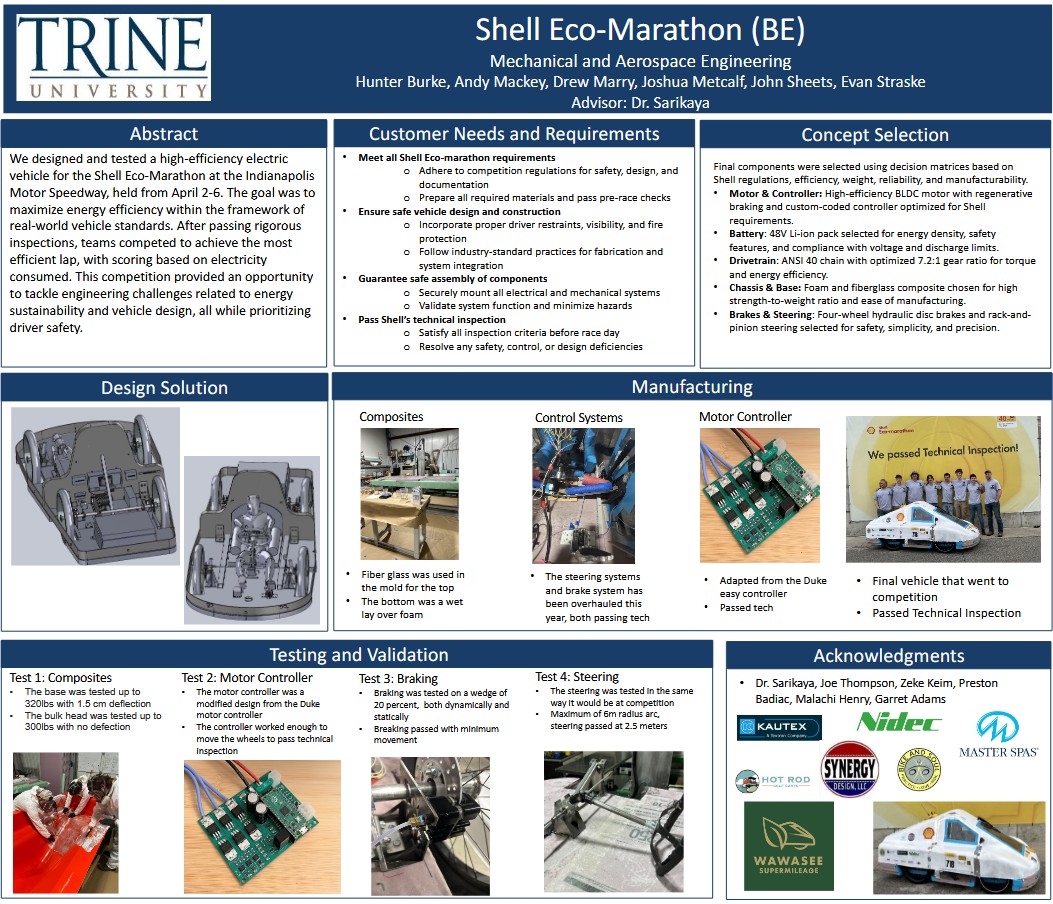
We designed and tested a high-efficiency electric vehicle for the Shell Eco-Marathon at the Indianapolis Motor Speedway, held from April 2-6, 2025. The goal was to maximize energy efficiency within the framework of real-world vehicle standards. After passing rigorous inspections, teams competed to achieve the most efficient lap, with scoring based on electricity consumed. This competition provided an opportunity to tackle engineering challenges related to energy sustainability and vehicle design, all while prioritizing driver safety.
Members: Hunter Burke, Andrew Mackey, Drew Marry, Joshua Metcalf, Johnathan Sheets and Evan Straske
Advisor: Rizacan Sarikaya, Ph.D.
Sponsors: Hot Rod Golf Carts, Kautex, Master Spas, Nidec, Trine University's Wade Department of Mechanical and Aerospace Engineering

This project, a collaboration between BF Goodrich Tires and Trine University students, aimed to provide tire spray patterns while maintaining barcode readability. Currently, identification issues are corrected manually, but BF Goodrich plans to automate the process. The team developed an on-campus prototyping device for testing modifications. Design work was led by Conner Underwood and Justin Dresbach, electrical and computational by Arie Lowe and Aaron Pike, and manufacturing and testing by Weston Manske, Alex Houser, Conner Underwood and Justin Dresbach.
Members: Justin Dresbach, Alex Houser, Arie Lowe, Weston Manske, Aaron Pike and Conner Underwood
Advisor: Gurudutt Chandrashekar, Ph.D.
Sponsor: BF Goodrich
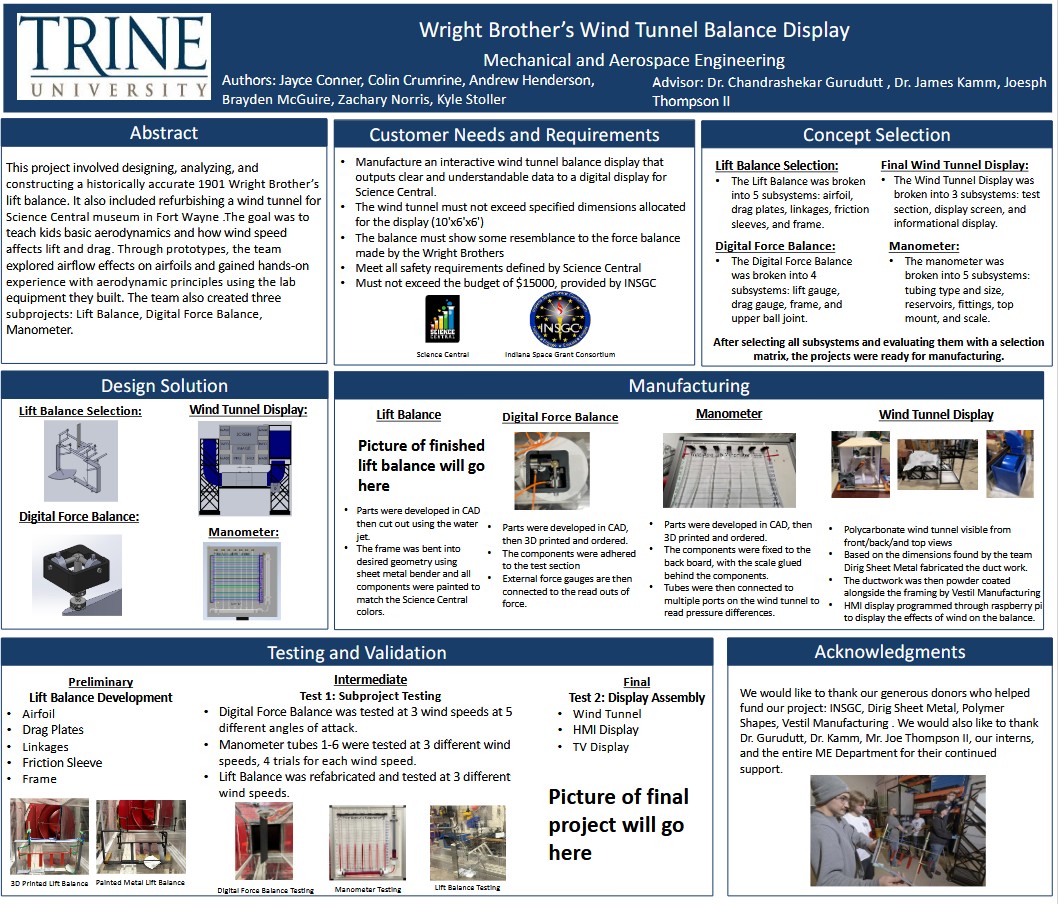
This project involved designing, analyzing and constructing a historically accurate 1901 Wright Brothers lift balance. It also included refurbishing a wind tunnel for Science Central Museum in Fort Wayne and creating a propeller balance, digital force balance and six-tube manometer for Trine Aero Lab. The goal was to teach kids basic aerodynamics and how wind speed affects lift and drag. Through prototypes, the team explored airflow effects on airfoils and gained hands-on experience with aerodynamic principles using the lab equipment they built.
Members: Jayce Conner, Colin Crumrine, Andrew Henderson, Brayden McGuire, Zachary Norris and Kyle Stoller
Advisor: Gurudutt Chandrashekar, Ph.D.
Technical Advisor: James Kamm, Ph.D.
Sponsor: Indiana Space Grant Consortium